The Best Exercises for Menopause
Quick Answer: The best exercise for menopause is strength training, 2–3 sessions a week — it directly counters the accelerated muscle and bone loss that comes with falling estrogen. Build around it with weight-bearing cardio (brisk walking, jogging, dancing) for bone and heart health, mobility work for the stiffness, and something genuinely calming for stress and sleep. A workable week: 2–3 strength sessions, 150 minutes of moderate cardio, and mobility most days. (General guidance — talk to your doctor about your own situation.)
Here’s the frustrating part: the routine that worked in your thirties often stops working in your late forties, and the instinct is to do more cardio.
That’s almost exactly backwards. The thing menopause takes from you fastest is muscle and bone — and cardio alone doesn’t defend either one.

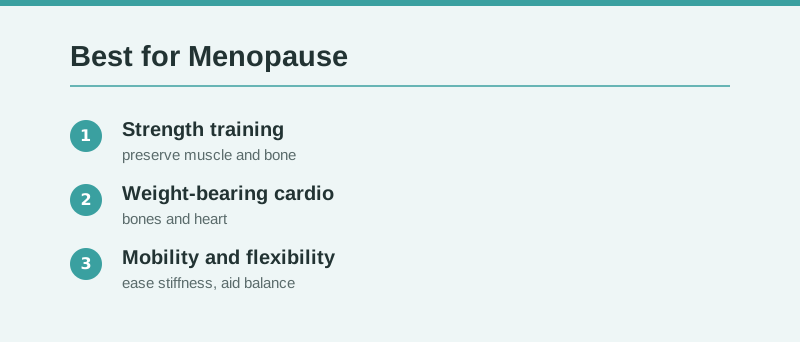
Why is strength training the single best exercise for menopause?
Because it’s the only one that directly opposes what’s happening biologically.
Falling estrogen accelerates the loss of both muscle mass and bone density — women can lose a significant share of their bone density in the years immediately around menopause, and muscle loss speeds up in parallel. Strength training is the most direct countermeasure to both: loading a muscle tells it to stay, and loading a bone tells it to stay dense.
The knock-on effects are the ones people notice first:
- Metabolism. Muscle is metabolically active tissue. Keeping it makes the body-composition shift far less steep.
- Strength for real life. Carrying, lifting, getting up off the floor easily at 70 — this is what’s actually being built.
- Blood sugar and joint support. Both improve with regular resistance work.
What it looks like: 2–3 sessions a week, 30–45 minutes, covering the major patterns — squat, hinge (deadlift), push, pull, carry. Use weights heavy enough that the last 2–3 reps of a set of 8–12 are genuinely hard, and add load over time. Progressive overload is the active ingredient; the same 5 lb dumbbells for two years won’t do it.
If you’re new to lifting, three or four sessions with a trainer to learn the hinge and squat patterns is the best money in the whole plan.
What kind of cardio is best during menopause?
Weight-bearing cardio, specifically — walking, jogging, hiking, dancing, stair climbing. The impact contributes to bone maintenance in a way that cycling and swimming, for all their other merits, don’t.
Aim for roughly 150 minutes of moderate activity a week, which is a brisk 30-minute walk five times over. Moderate means you can talk but not sing.
Cardiovascular risk rises after menopause, so this half of the plan is doing real long-term work even when it feels like the easy part. And a brisk daily walk is the single most accessible entry point there is — no equipment, no learning curve, no gym.
If you enjoy higher-intensity work, short intervals a couple of times a week are fine and effective. Just don’t let them displace strength training, and watch how they interact with your sleep — some women find hard evening sessions make night sweats worse.

What about mobility, balance and flexibility?
Menopause commonly brings stiffness and new aches, and this is the category that addresses them directly.
Mobility work — yoga, dynamic stretching, gentle joint circles — eases the stiffness that makes everything else feel harder. Ten minutes most days beats an hour once a week.
Balance training deserves its own mention, because it’s the quiet one. Standing on one leg while you brush your teeth, single-leg work in your strength sessions, or a weekly yoga class all build the balance that prevents falls — and falls are what turn reduced bone density from a number into a fracture. Thirty seconds per leg, twice a day, is a legitimate program.
Pelvic floor work belongs here too. Falling estrogen affects pelvic floor tissue, and this is a genuinely common and genuinely fixable midlife issue. A pelvic health physio is worth one appointment even if you think everything is fine.
What kind of movement helps with mood, sleep and stress?
The category that people cut first and shouldn’t.
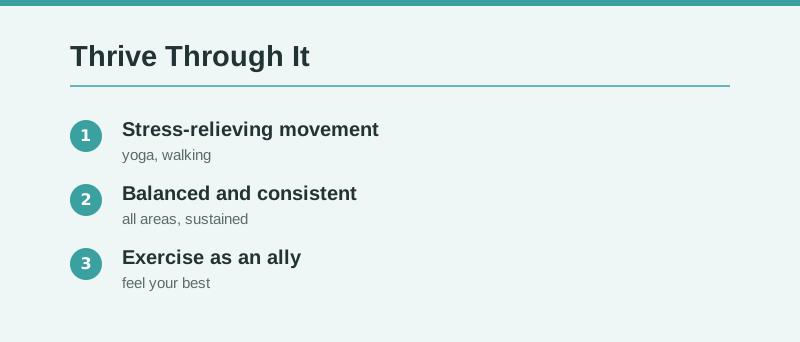
Menopause is frequently a stressful stretch — physically, emotionally, and often at a demanding point in work and family life. Calming movement (yoga, a walk outdoors, tai chi, easy swimming) lowers stress hormones, lifts mood, and — critically — improves sleep quality, which is the thing that makes every other symptom more manageable.
Two practical notes:
- Outdoors beats indoors for the mood effect. Morning light also helps the sleep side.
- Watch the timing. Vigorous exercise close to bedtime worsens sleep for many women in this stage. Move it earlier and see if the nights improve.
This isn’t a soft add-on to a real program. Managing stress supports physical health through the transition, and it’s often what determines whether you stay consistent with the rest.
What Nobody Tells You About Exercising Through Menopause
- Recovery takes longer, and that’s not a character flaw. You may need a day between hard sessions where you used to need none. Plan for it rather than pushing through and getting injured.
- Lifting heavier feels wrong and is right. A lot of midlife women have been steered toward light weights and high reps for decades. Bone responds to load, not to repetition.
- Joint aches often improve with movement, not rest. Estrogen affects connective tissue, and the stiffness that shows up in your forties usually responds better to consistent mobility than to backing off.
- Sleep is the biggest performance variable now. A bad-sleep week will make a normal workout feel brutal. Adjust the session, don’t abandon the plan.
- Consistency genuinely beats intensity here. Three moderate sessions a week for a year outperforms six heroic weeks followed by nothing.
- Progress shows up as capability, not as scale weight. Body composition can improve while the number doesn’t move. Track what you can lift and carry instead.
Mini FAQ
How often should I exercise during menopause?
A practical target: 2–3 strength sessions, 150 minutes of moderate cardio, and short daily mobility work each week. That’s about 4–5 sessions total, several of which can be a brisk 30-minute walk. If that sounds like a lot, start with two strength sessions and build — strength is the piece with the most to protect.
Can exercise help with hot flashes and night sweats?
Evidence is mixed on hot flashes specifically, and some women find intense exercise triggers them short-term. What’s much clearer is that regular exercise improves sleep, mood, and how well you tolerate symptoms overall. If vigorous evening sessions seem to worsen night sweats, shift them to the morning before concluding exercise doesn’t help.
When should I see a professional?
Check with your doctor before starting if you have cardiac risk factors, uncontrolled blood pressure, existing osteoporosis or a previous fragility fracture — the last two change which movements are safe. See a physio for persistent joint pain, and a pelvic health physio for any leaking, urgency or heaviness. And if symptoms are significantly affecting your life, a menopause-informed doctor can discuss options beyond exercise; movement is a powerful tool, not the only one.
TL;DR:
- Strength training 2–3×/week is the highest-value exercise in menopause — muscle and bone both depend on it.
- Load matters: last 2–3 reps of 8–12 should be hard, and increase over time.
- Add 150 min/week of weight-bearing cardio for bone and heart.
- Daily mobility + balance (30 seconds per leg counts) protects against falls.
- Include genuinely calming movement for stress and sleep; move hard sessions earlier if nights suffer.
- Consistency over intensity — and track capability, not scale weight.
Prioritise strength, protect your bones and heart, stay supple, and manage stress. Exercise is a genuine ally through this transition — see the full breakdown of exercises for menopause for more.
Keep Reading
This article is for general informational and styling purposes only. Fit, sizing, and product availability may vary.