Does Strength Training Actually Help With Hot Flashes, or Is That a Myth?
Quick Answer: Strength training doesn’t directly stop hot flashes the way some hormonal treatments do, but it’s consistently linked to better sleep, mood, and bone density during menopause, and some research suggests moderate exercise may reduce hot flash severity indirectly through better stress and temperature regulation.
It’s a claim that gets repeated a lot without much nuance — so what does strength training actually do here, and what does it not do?

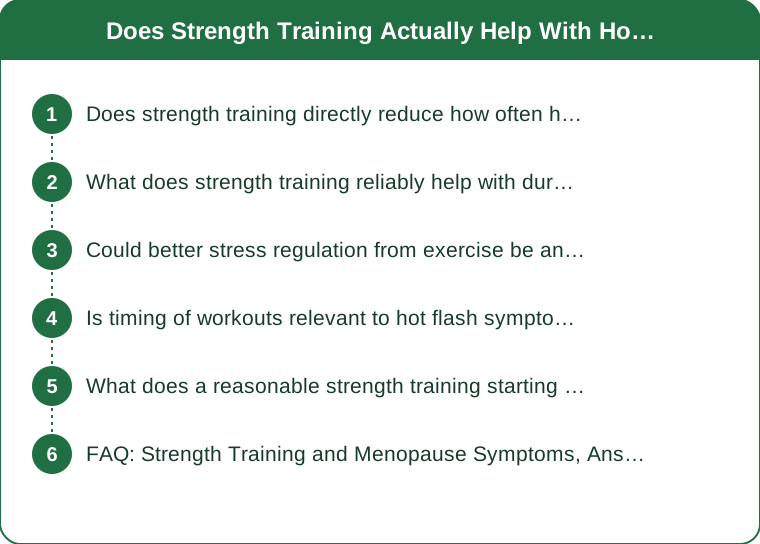
Does strength training directly reduce how often hot flashes happen?
The evidence here is mixed and not strongly conclusive — some studies show a modest reduction in frequency with regular exercise, others show no significant change, so it shouldn’t be framed as a guaranteed fix the way it sometimes is in casual advice. That mixed evidence is worth sitting with rather than rounding up to a confident yes, since overselling exercise as a hot flash cure can lead to disappointment and abandoning a genuinely valuable habit for the wrong reason.
What does strength training reliably help with during menopause, even if not hot flashes directly?
Bone density loss accelerates during and after menopause due to declining estrogen, and strength training is one of the most well-supported interventions for slowing that loss — this benefit is much better established than any direct hot-flash connection. Sleep quality and mood are the other two areas with consistently strong support, and both indirectly affect how hot flashes are experienced, since poor sleep and higher stress tend to make hot flash episodes feel more disruptive even without changing their actual frequency.
Could better stress regulation from exercise be an indirect pathway to fewer or milder hot flashes?
This is a reasonable, evidence-informed hypothesis — stress and anxiety are known to trigger or worsen hot flash episodes for many people, and regular strength training is associated with lower baseline stress reactivity, which could plausibly reduce how often flashes are triggered even without a direct physiological link. It’s an indirect mechanism rather than a proven direct one, which is an important distinction when setting expectations about what a new strength routine will and won’t change.

Is timing of workouts relevant to hot flash symptoms?
Some people report that exercising too close to bedtime, particularly intense sessions, can trigger night sweats or disrupt the sleep that’s already fragile during menopause — shifting strength training earlier in the day is a low-cost adjustment worth trying if night sweats seem to track with evening workouts.
What does a reasonable strength training starting point look like for someone in perimenopause or menopause?
Two to three sessions a week covering major muscle groups, with a focus on progressive resistance rather than high intensity alone, aligns with both the bone-density and general wellbeing research — this doesn’t need to be complicated or high-intensity to be effective for these specific goals.
FAQ: Strength Training and Menopause Symptoms, Answered
Should hot flashes be the main reason someone starts strength training during menopause?
Probably not the only reason — bone density, muscle mass retention, mood, and sleep are the better-supported benefits, with any hot flash improvement more of a possible bonus than the main event.
Does cardio work better than strength training for hot flashes specifically?
Neither has strong, consistent direct evidence for reducing hot flash frequency, though both offer other well-documented menopause-related benefits worth pursuing regardless.
Is it worth talking to a doctor before starting strength training during menopause?
For anyone new to strength training or with existing health conditions, yes — a doctor or physical therapist can help tailor a starting program safely, though strength training itself is broadly considered safe and beneficial during this life stage. This is general information, not medical advice.
TL;DR:
- The direct link between strength training and reduced hot flash frequency is mixed, not conclusive
- Bone density, sleep, and mood benefits are much more strongly supported
- Better stress regulation from exercise may indirectly reduce flash triggers
- Evening workouts close to bedtime may worsen night sweats for some people
- Two to three sessions a week is a reasonable, well-supported starting point
Strength training is worth doing during menopause for well-proven reasons — hot flash relief just isn’t the strongest one of them.
Keep Reading
This article is for general informational and styling purposes only. Fit, sizing, and product availability may vary.