Does Exercise Actually Help With Hot Flashes? Here's What the Timing Reveals
Quick Answer: Regular moderate exercise can reduce hot flash frequency over time, but intense exercise done too close to bedtime can trigger one in the short term — timing your workout earlier in the day gets you the long-term benefit without the immediate trigger.
You’ve heard exercise helps menopause symptoms overall, but also that a hard workout right before bed seems to bring one on. Both things are true, and here’s why.
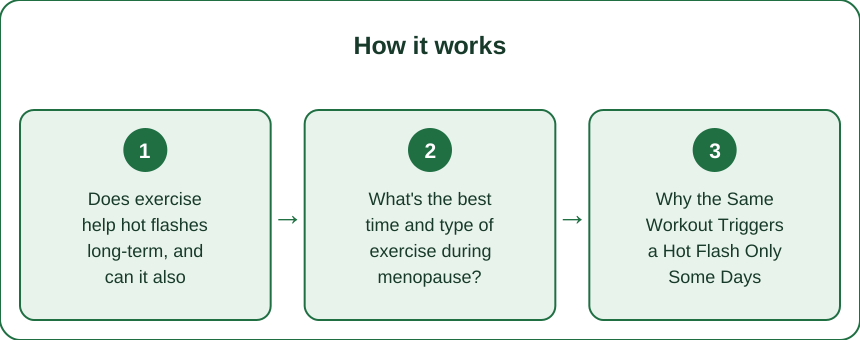
Does exercise help hot flashes long-term, and can it also trigger one?
Does exercise help hot flashes long-term?
Yes — regular moderate exercise is associated with improved thermoregulation and reduced hot flash frequency over weeks to months of consistency, likely through improved cardiovascular efficiency and stress hormone regulation. This isn’t an instant fix; the benefit builds over 8-12 weeks.
Why does a hard workout sometimes trigger a hot flash right after?
Intense exercise raises your core body temperature immediately, which can trigger the same thermoregulatory response as an external heat trigger. This is a short-term response, separate from the long-term benefit.
What’s the best time and type of exercise during menopause?
What’s the best time of day to work out?
Morning or early afternoon workouts tend to cause less sleep disruption from post-exercise heat compared to intense evening sessions. If evening is your only option, opt for lower-intensity movement instead.
Which type of exercise helps most — cardio or strength training?
Both matter for different reasons: strength training supports bone density and muscle mass, while moderate cardio supports cardiovascular health and may help regulate hot flash frequency. A combination of both, most weeks, covers more ground.
Can exercise intensity make hot flashes worse if I have many per day?
For frequent, severe hot flashes, very high-intensity training can be genuinely uncomfortable and may need to be dialed back temporarily. Track your own pattern for a couple of weeks.
How much exercise is actually needed to see improvement?
Most research supporting hot-flash improvement uses 150 minutes of moderate activity per week, roughly 30 minutes, 5 days.
Why the Same Workout Triggers a Hot Flash Only Some Days
Hot flash triggers are cumulative and situational — the same workout that’s fine on a cool, well-rested day might trigger a flash on a day you’re already dealing with heat, stress, caffeine, or poor sleep the night before. It’s not that the workout became harder; your baseline threshold for a heat trigger shifted based on other factors that day.
Tracking a simple log (sleep, stress, workout intensity, hot flash occurrence) for two weeks often reveals your personal pattern more clearly than trying to isolate exercise alone as the cause.
FAQ: Menopause Exercise Questions, Answered
Should I stop exercising if it triggers hot flashes?
No — adjust timing and intensity rather than stopping, since the long-term benefits of consistent exercise generally outweigh the short-term discomfort of an occasional triggered flash.
Does strength training help hot flashes directly?
Its main proven benefit is for bone density and muscle mass during menopause; hot flash improvement is more strongly linked to consistent moderate cardio, though both matter for overall symptom management.
How long before I notice fewer hot flashes from exercising regularly?
Most people report noticeable improvement within 8-12 weeks of consistent moderate activity, not immediately.
TL;DR:
- Regular moderate exercise reduces hot flash frequency over 8-12 weeks
- Intense exercise close to bedtime can trigger a hot flash short-term
- Combine strength training (bone/muscle) with moderate cardio (symptom regulation)
- Track sleep and stress alongside workouts to spot your personal triggers
This is general information, not medical advice — talk to your doctor about exercise and menopause symptom management specific to your health history.
Keep Reading
This article is for general informational and styling purposes only. Fit, sizing, and product availability may vary.