Working Out Through Hot Flashes: The Exercise-Menopause Truce
Quick Answer: Exercising through menopause means training alongside an unreliable internal thermostat, but a workout doesn’t have to be a hot-flash trigger. Shed-in-seconds layers, an iced water bottle, a mid-flash pause-and-cool protocol, and scheduling sessions for your cooler time of day handle today’s workout — and regularly active women tend to report fewer, milder flashes over time. Talk with a healthcare provider about your specific symptoms; this is general guidance, not medical advice.
Exercising through menopause means training alongside an unreliable thermostat — the workout that summons a hot flash mid-set is a genuine deterrent. The truce has two parts: cooling logistics for today’s session, and the evidence that regular training may turn the thermostat’s volume down over time.
Does Regular Exercise Actually Reduce Hot Flashes Over Time?
The research lean is genuinely encouraging: regularly active women tend to report fewer and milder vasomotor symptoms over time. The likely mechanisms include improved thermoregulation and a fitness-stress-sleep triangle that reinforces itself the more consistently you train. Exercise isn’t a hot-flash cure — it’s closer to a thermostat-training program with real side benefits, and those benefits tend to show up gradually over months rather than after a single good workout.

How Do I Actually Flash-Proof a Single Workout?
A few logistics handle most of today’s session:
- Layers that shed in seconds — a zip vest over a tank means you can strip down the moment a flash hits, instead of being stuck in something you can’t quickly remove.
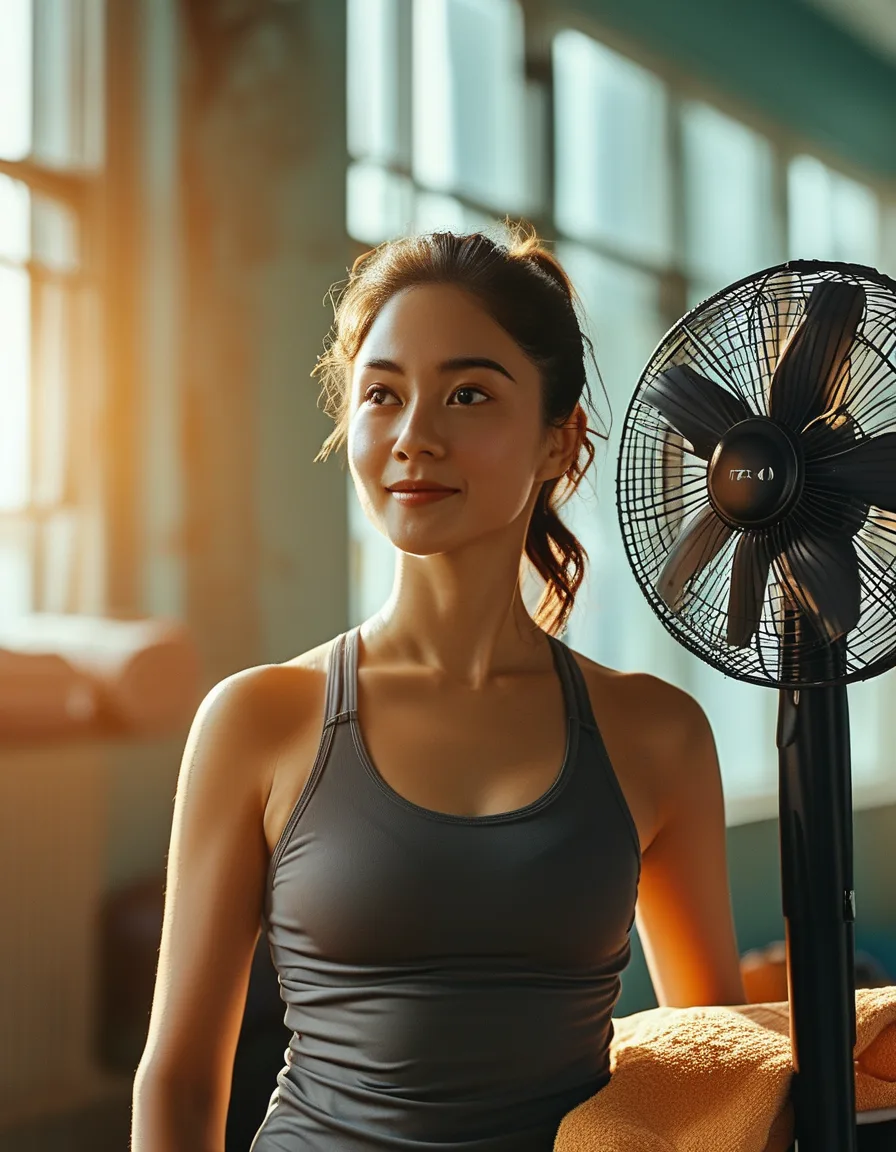
- Claim the fan early — gym fans run on first-come diplomacy, so grab one before you need it, not mid-flash.
- Stage a cooling towel and ice your water in advance, so both are ready the instant you need them rather than something you have to go find.
- Follow the mid-flash protocol: pause, sip, cool your wrists, and resume once it passes. It passes — the set can wait a minute.

Is There a Better Time of Day to Work Out If I’m Flash-Prone?
Often, yes. Many women’s flashes cluster by time of day, and training in your cooler windows — mornings dominate the anecdotal evidence — tends to reduce how often a session gets interrupted. It’s also worth noting the trigger overlaps: an intense session in a hot room stacks the odds against you, which is exactly why the hot-yoga question tends to answer itself for anyone who’s flash-prone. The pool, meanwhile, is arguably this era’s perfect workout venue — built-in cooling the whole session through.
Does My Workout Wardrobe Actually Matter for Managing Flashes?
More than people expect. Wicking fabric everywhere earns its keep during a flash-prone session. Dark or patterned tops give you flush-and-sweat confidence, since they hide the visible signs of a flash far better than a light solid color would. And prioritize a genuinely breathable bra — it’s one of the pieces closest to your core temperature regulation, and a poor one can make an already uncomfortable moment worse. And a lighter note, offered sincerely: the mid-plank hot flash is a shared demographic experience. Every gym’s fifty-plus corner has traded the knowing nod at least once.
What Nobody Tells You About Exercising Through Hot Flashes
- A hot flash mid-workout isn’t a sign to quit training — it’s a sign to adjust the session, not skip it. Pausing, cooling down, and resuming preserves the workout instead of writing off the whole day.
- The pool solves more of this problem than almost any other venue. Built-in cooling for the entire session sidesteps most of the logistics this whole guide is about.
- The long-game benefit is real but slow. Don’t expect fewer flashes after one good week of training — the thermoregulation improvements research points to build up over months of consistency.
- Dark or patterned tops are a legitimate strategy, not just a preference. They genuinely reduce the visibility of flush and sweat, which matters for confidence in a group class setting.
Hot Flash Exercise FAQ
Should I avoid hot yoga or hot workout rooms if I get hot flashes?
If you’re flash-prone, an intense session in a hot room does stack the odds of triggering a flash mid-workout. It’s not an absolute rule, but many women find a cooler-room alternative considerably more comfortable and less disruptive to their session.
What’s the single most useful piece of gear for working out through hot flashes?
An easily removable outer layer — a zip vest or light jacket over a tank — since it lets you shed heat instantly the moment a flash starts, without having to stop and change clothes.
Will exercise actually make my hot flashes less frequent over time, or just help me manage them during a workout?
Both, based on the research lean — regularly active women tend to report fewer and milder vasomotor symptoms over time, likely through improved thermoregulation, alongside the immediate logistics (layers, cooling, timing) that manage flashes during any single session.
Bottom Line
Layers that shed, fans claimed early, cool windows scheduled, long-game evidence banked. The thermostat is unreliable — the training plan doesn’t have to be, and over months, the two negotiate.
TL;DR:
- Regular exercise is linked to fewer, milder hot flashes over time, likely via improved thermoregulation
- Shed-in-seconds layers, an iced water bottle, and a staged cooling towel handle today’s session
- Pause, sip, cool your wrists, and resume when a flash passes — the set can wait
- Cooler times of day (often mornings) and pool workouts reduce flash-triggering conditions
- Wicking fabric, dark or patterned tops, and a breathable bra all genuinely help
Keep Reading
This article is for general informational and styling purposes only. Fit, sizing, and product availability may vary.