How Do You Tell Whether a Perimenopause Plateau Is a Training Problem or a Recovery Problem?
Quick Answer: A training plateau means the stimulus is no longer sufficient and needs more load, more volume or a new variation. A recovery plateau means the stimulus is fine but you are not absorbing it, and adding more makes it worse. The distinguishing test is a planned easy week: if performance improves afterwards, it was recovery; if nothing changes, it was training. In perimenopause, recovery plateaus are more common than they were a decade earlier, which is why the instinct to train harder misfires more often.
You added sessions, added weight, and it got worse.
That outcome is itself the answer to the question.


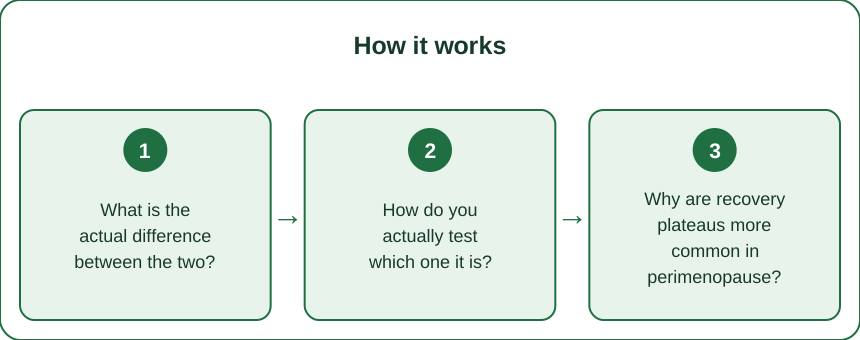
What is the actual difference between the two?
A training plateau means the stimulus has stopped being challenging. Your body has adapted to the current load and needs a new one.
A recovery plateau means the stimulus is adequate or excessive and you are not converting it into adaptation because recovery is insufficient.
They look identical in the training log: flat numbers, sessions that feel harder than they should, no visible progress.
But the responses are opposite. Training plateaus need more; recovery plateaus need less, at least temporarily.
And guessing wrong is costly in one direction specifically. Adding load to a recovery plateau digs the hole deeper and can take weeks to reverse.
Which is a strong argument for testing rather than assuming, and the test is inexpensive.
How do you actually test which one it is?
Take a planned easy week. Keep training but reduce volume by roughly half, keep the same movements, and reduce intensity slightly.
Then retest a familiar lift or session in the following week.
If performance improves, it was recovery. The fitness was present and fatigue was masking it - this is the most common outcome in midlife plateaus.
If nothing changes, it was training, and the programme genuinely needs a new stimulus.
One week is usually enough to distinguish them, and the cost of being wrong about a deload week is close to zero.
Do this before changing the programme, not after several weeks of adding load.
And note what else changes during the easy week - sleep, mood, appetite - because those are the recovery signals worth tracking going forward.
Why are recovery plateaus more common in perimenopause?
Sleep quality is commonly disrupted during perimenopause, and sleep is the primary recovery process. Broken sleep is the single largest contributor.
Hormonal fluctuation itself varies week to week, which means the same programme lands on a genuinely different physiological state at different points.
Recovery capacity between hard sessions is frequently reduced, which is well reported by both athletes and coaches in this population.
Life load is often at a peak in the same decade - work responsibility, caring responsibilities, disrupted schedules - and total stress is what recovery has to absorb.
Protein needs may be higher than earlier in life, and under-eating protein is a common and correctable contributor.
None of this means training less overall. It means the ratio of hard to easy work usually needs adjusting rather than the total amount reducing. This is general information, not medical advice.

What should you change if it is a recovery plateau?
Reduce the number of genuinely hard sessions, not the number of sessions. Two hard and two easy beats four moderate.
Add a full day between hard sessions rather than removing sessions entirely.
Address sleep as a training variable, because it is one - consistent timing, a cool dark room, and limiting alcohol have the clearest effects.
Check protein intake, which is frequently below where it needs to be and is easy to correct at breakfast.
Build in a planned easy week every four to six weeks rather than waiting for a plateau to force one.
Expect week-to-week variation and stop treating it as failure, since the same session genuinely feels different at different cycle points.
And if symptoms are significantly disrupting sleep or daily life, speak to a healthcare professional. This is general information, not medical advice.
What should you change if it is genuinely training?
Add load before adding volume. Small increases in weight with the same sets and reps is the lowest-cost progression.
Change the variation rather than the whole programme - a different squat or press pattern provides a new stimulus without adding total stress.
Reduce reps and increase weight if you have been in higher rep ranges for months, since heavier work is frequently what has been missing.
Add power work, which tends to decline faster than maximal strength after 45 and is often entirely absent from programmes.
Progress one variable at a time so you can tell what worked.
And give any change eight weeks before judging it, since adaptation timelines lengthen and four weeks is frequently too short to see the answer.
FAQ: Perimenopause Plateau Questions, Answered
How do I tell a training plateau from a recovery plateau?
Take a planned easy week at about half volume, then retest a familiar session. Improvement means recovery; no change means training.
Why did adding more sessions make it worse?
That is the signature of a recovery plateau. Adding stimulus when the problem is absorption compounds the deficit rather than closing it.
Should I train less in perimenopause?
Usually not less overall, but with a different ratio - fewer genuinely hard sessions with more space between them, and more genuinely easy work.
How often should I plan an easy week?
Every four to six weeks is a reasonable default, planned rather than forced by a plateau.
Does sleep really matter that much?
It is the primary recovery process, and disrupted sleep is among the most commonly reported perimenopause changes. It is a training variable, not a lifestyle footnote.
How long before a programme change shows results?
Give it eight weeks. Adaptation timelines lengthen, and judging at four weeks frequently produces a change made too early. This is general information, not medical advice.
Should I see a professional?
If symptoms are significantly affecting sleep, mood or daily function, yes. This article is general information, not medical advice.
TL;DR:
- Training plateaus need more stimulus; recovery plateaus need less - and they look identical in the log.
- The test is a planned easy week at half volume, then a retest.
- Improvement afterwards means recovery was the problem; no change means training was.
- Recovery plateaus are more common in perimenopause, largely through disrupted sleep.
- Fix the ratio of hard to easy sessions rather than the total amount of training.
- If it is genuinely training, add load before volume and give any change eight weeks.
Adding more when the problem is absorption is why plateaus get worse. This is general information, not medical advice.
Keep Reading
This article is for general informational and styling purposes only. Fit, sizing, and product availability may vary.