How Does Strength Training Change After 45 and What Should You Do Differently
Quick Answer: After around 45, recovery capacity declines faster than training capacity does. You can still train hard - you cannot train hard as often. Add hormonal changes affecting muscle protein synthesis, tendon properties, and sleep, and the correct adjustment is more recovery and more protein, not less intensity. The most common mistake in midlife training is reducing weight and adding volume, which is exactly backwards.
Here are the specific questions, answered.

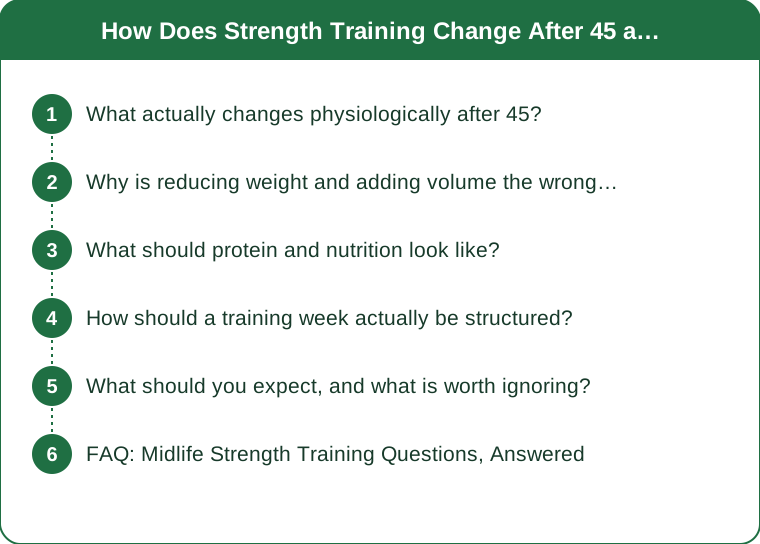
What actually changes physiologically after 45?
Several things, and they do not all move in the same direction.
Muscle protein synthesis becomes less responsive. The same protein intake and the same training stimulus produce a somewhat smaller building response than they did at 25 - often described as anabolic resistance. The response is still there; it just needs a stronger signal.
Recovery between sessions takes longer. This is the change people notice first, and it is more pronounced than the change in what you can do in a session. Peak capacity holds up better than the ability to repeat it.
Tendon and connective tissue properties change. These structures adapt more slowly than muscle at any age, and the gap widens with time - which is why midlife injuries are disproportionately tendon rather than muscle.
For women, perimenopause adds specific changes. Declining and fluctuating oestrogen affects muscle mass, bone density, tendon properties, sleep, and recovery. The variability is often more disruptive than the direction - the same training week genuinely feels different month to month.
And sleep quality frequently declines, which compounds every other change, since recovery depends on it.
What does not decline much: the ability to gain strength. Strength gains remain available throughout life. The limiting factor is recovery capacity, not adaptive capacity - which is the whole basis of the adjustments below.
Why is reducing weight and adding volume the wrong response?
Because it removes the stimulus that matters most while increasing the cost.
Heavier loads are the signal for both strength and bone. Mechanical loading is what drives bone adaptation, and bone density is a central concern in midlife, especially for women around and after menopause. Light weights for high reps do not provide that signal.
And heavy training addresses anabolic resistance directly. If the muscle-building response is somewhat blunted, the answer is a stronger stimulus, not a weaker one applied more often.
More volume raises recovery cost, which is the actual limiting factor. Adding sets and sessions is exactly the wrong direction when your capacity to recover between sessions is what declined.
The common pattern that fails: dropping to light weights, higher reps, and five sessions a week. Higher recovery cost, weaker stimulus - the worst combination available.
The better structure: fewer sessions, heavier work, more recovery. Two or three quality strength sessions per week, with genuinely challenging loads in moderate rep ranges, plus adequate rest between them.
Warm up more thoroughly than you used to. This is not optional now. Tendons and joints need more preparation, and warm-up time is the cheapest injury prevention available - and it matters more as the weather cools and you start sessions from a colder baseline.
What should protein and nutrition look like?
Higher than general guidelines, and distributed differently.
Protein needs rise rather than fall. Because of anabolic resistance, older adults generally need more protein per meal to trigger the same muscle protein synthesis response - commonly cited targets sit above general population recommendations, often in the region of 1.6g or more per kg of body weight for active people.
Distribution matters more than it used to. Roughly 25 to 40g of protein per meal across three or four meals is more effective than the same total concentrated in one sitting, precisely because each dose needs to be large enough to clear the higher threshold.
Do not under-eat while trying to train hard. The frequent midlife combination of a significant calorie deficit plus increased training undermines recovery, muscle retention, and bone - and it is the version of the plan most people default to.
Prioritise calcium and vitamin D intake, both relevant to bone health, and consider having vitamin D status checked - deficiency is common, particularly through the darker months, and this is the season to think about it.
And take creatine seriously as an option. It is among the most researched supplements available, with evidence supporting strength and lean mass in older adults, and it is worth discussing with a healthcare professional.
This is general information, not medical advice. Perimenopause, menopause, bone health, and midlife nutrition all warrant individual guidance - speak to a healthcare professional or registered dietitian, particularly regarding bone density screening, hormone therapy, and supplement choices.

How should a training week actually be structured?
Fewer, better sessions with recovery treated as part of the programme.
Two to three strength sessions per week, full body or upper/lower split. This frequency is sufficient for most people and it leaves genuine recovery time between sessions - which is the variable that changed.
Include heavy work in moderate rep ranges. Something in the region of 5 to 10 reps at a load that is genuinely challenging, with 2 to 3 reps left in reserve on most sets. Occasional heavier work is valuable for bone and strength.
Add impact and power work if appropriate. Jumping, hopping, or bounding provides bone loading that steady lifting does not - though this needs progressing carefully and is not appropriate for everyone, particularly with existing joint issues or low bone density.
Keep most conditioning easy. Low intensity, conversational pace, which supports health without adding much recovery cost. One harder conditioning session per week is plenty alongside strength work.
Programme deload weeks every four to six weeks. Reduced volume, maintained intensity. This is more necessary now than it was at 30, and it is the thing people skip until something hurts.
And track recovery markers, not just training numbers. Sleep quality, morning energy, joint comfort, and motivation. When these decline, reduce volume before something forces you to.
Adjust around your cycle if you have one and find it helpful. Some people train and recover noticeably differently across the month, particularly through perimenopause when the variability increases - and planning heavier sessions when you tend to feel strongest is a legitimate strategy rather than an excuse.
What should you expect, and what is worth ignoring?
Realistic expectations prevent both discouragement and over-reaching.
Progress is slower but real. Strength gains remain available at every age. The rate is lower and the consistency requirement is higher, but the direction is still up - and that is the part most worth internalising.
Setbacks take longer to recover from. A missed month costs more than it did at 30, which makes consistency more valuable than intensity. Sustainable beats optimal by a wider margin now.
Body composition changes are harder to read. Muscle gain and fat loss both happen more slowly, so the useful measurement window is months rather than weeks. Scale-watching is even less informative than it used to be.
Ignore programmes designed for 25-year-old athletes. High frequency, high volume, minimal recovery. Not because you cannot do the exercises, but because the recovery assumptions do not apply.
And ignore the framing that midlife training is about damage limitation. Strength, bone density, and function are all improvable, and the training that improves them is genuine strength training - not a gentler version of it.
One thing worth taking seriously: pain that is not muscular fatigue. Tendon pain, joint pain, or anything persistent deserves assessment rather than working around it. Tendon problems in particular respond much better to early intervention than to months of modification.
This is general information, not medical advice.
FAQ: Midlife Strength Training Questions, Answered
Should I lift lighter weights as I get older?
Generally no. Heavier loads drive both strength and bone adaptation, and a blunted muscle-building response needs a stronger stimulus, not a weaker one. Reduce frequency rather than load.
How many strength sessions per week?
Two to three for most people. Recovery capacity is the limiting factor after 45, so fewer quality sessions with real rest between them beats five moderate ones.
How much protein do I need?
More than general guidelines suggest - often around 1.6g per kg of body weight or above for active people, spread across three or four meals of roughly 25 to 40g each.
Is it too late to build muscle after 50?
No. Strength and muscle gains remain available throughout life. Progress is slower and consistency matters more, but the adaptive capacity is still there.
How do I train around perimenopause symptoms?
Expect more week-to-week variability, plan heavier sessions when you tend to feel strongest, prioritise sleep and protein, and adjust volume rather than abandoning intensity.
How often should I take a deload week?
Every four to six weeks - reduced volume with maintained intensity. It matters more now than it did at 30, and it is usually the first thing people skip.
TL;DR:
- After about 45, recovery capacity declines faster than training capacity. You can still train hard; you cannot train hard as often.
- Reducing weight and adding volume is exactly backwards - it weakens the stimulus while raising the recovery cost.
- Heavy loading drives both strength and bone, which makes it more important in midlife, not less.
- Structure: two to three quality sessions per week, 5 to 10 reps at genuinely challenging loads, with real rest between.
- Protein needs rise - often 1.6g/kg or above, spread as 25 to 40g across three or four meals.
- Warm up thoroughly and deload every four to six weeks - tendons adapt more slowly and this is where midlife injuries happen.
- Track sleep, energy, joint comfort, and motivation - reduce volume when they decline, before something forces you to.
Strength gains stay available at every age. The limit is recovery, not adaptation.
This is general information, not medical advice.
Keep Reading
This article is for general informational and styling purposes only. Fit, sizing, and product availability may vary.