How Much Protein Do You Actually Need in Perimenopause?
Quick Answer: The standard recommendation of 0.8 g of protein per kilogram of body weight is a minimum to prevent deficiency, not a target for maintaining muscle. Most research on active adults over 40 supports something closer to 1.2 to 1.6 g/kg — for a 150 lb woman, roughly 82 to 110 g per day — with 25 to 30 g at each meal rather than most of it at dinner. Distribution matters nearly as much as the total.
If you have been lifting consistently and eating what you have always eaten, and your strength has stalled anyway, protein is one of the first things worth checking. It is also one of the most confusingly reported topics in midlife health, with recommendations ranging from indifferent to alarming.
Here is what the evidence actually supports, laid out as the questions women in perimenopause tend to ask. This is general information, not medical advice — talk to your doctor or a registered dietitian about your own situation, especially with kidney conditions or other medical considerations.

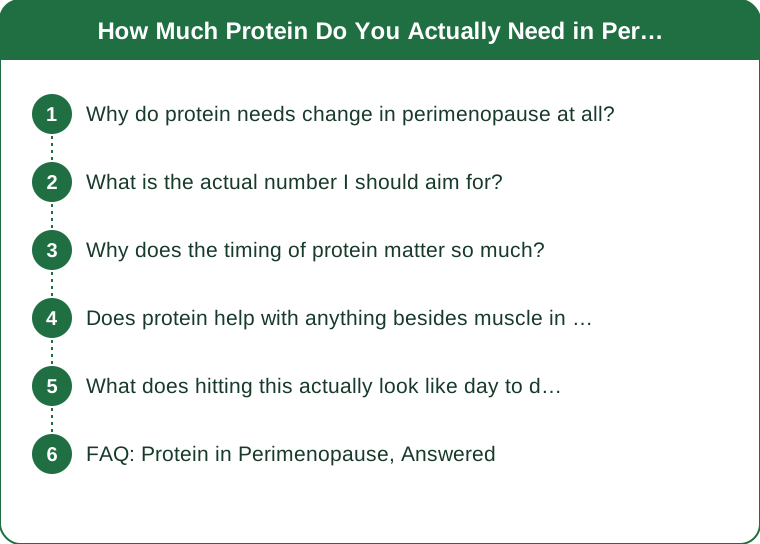
Why do protein needs change in perimenopause at all?
What actually changes?
Two things, and they compound. Declining estrogen is associated with reduced muscle protein synthesis and increased muscle protein breakdown, which means the same intake supports less muscle than it used to. Separately, anabolic resistance — the reduced muscle-building response to a given dose of protein — increases with age in both sexes.
The practical meaning is that maintaining what you have now takes more input than it did at 30, and building takes considerably more.
Is this happening even if I feel fine?
Usually yes, and gradually. Muscle mass loss typically begins in the thirties and accelerates around the menopause transition, but it is slow enough that most people notice a change in how they look or how heavy something feels long before they connect it to muscle.
The encouraging part: this is one of the most modifiable age-related changes there is. Adequate protein plus resistance training reliably preserves and often increases muscle in this age group.
Does that mean I need to eat more than a younger woman?
More than a sedentary younger woman, yes. Roughly the same as an active younger athlete. The target is not exotic — it is simply higher than the number most women were told to aim for.
What is the actual number I should aim for?
What does the research support?
For active adults over 40 aiming to maintain or build muscle, the range that appears consistently in the literature is 1.2 to 1.6 g of protein per kilogram of body weight per day, and some work on resistance-training older adults supports going to the upper end or slightly beyond.
Convert it once and write it down. Body weight in pounds divided by 2.2 gives kilograms; multiply by 1.2 and by 1.6 for your range.
What does that look like in real numbers?
For a 140 lb woman (about 64 kg): roughly 76 to 102 g per day. For a 160 lb woman (about 73 kg): roughly 87 to 116 g per day. For a 180 lb woman (about 82 kg): roughly 98 to 131 g per day.
If you are carrying significant excess weight, calculating from a goal weight or from lean body mass gives a more sensible number than using total body weight.
How far off is the typical intake?
Most surveyed women in this age range land somewhere between 55 and 70 g per day, with the large majority of it at dinner. So the gap is real but not enormous — usually 20 to 40 g, which is one to two additional servings.
Is more always better?
No. Above roughly 2.0 g/kg there is little additional benefit for most people, and the practical cost — displacing fiber, vegetables, and other foods — starts to matter. Aim for the range, not the maximum.
Why does the timing of protein matter so much?
What is wrong with getting it all at dinner?
Muscle protein synthesis is stimulated per meal, and it saturates. A 70 g dinner does not produce twice the response of a 35 g dinner — much of the excess is simply oxidized. Meanwhile you have spent the whole day, including the hours after training, below the threshold that triggers synthesis at all.
This is why two people eating identical daily totals can have quite different results.
What is the per-meal target?
Roughly 25 to 30 g of high-quality protein per meal, three to four times per day. Some research in older adults suggests the per-meal threshold rises with age, which is another argument for the higher end.
Which meal do most women miss?
Breakfast, overwhelmingly. A typical breakfast of toast, fruit, coffee, or a bowl of oats lands somewhere between 5 and 12 g. Fixing breakfast alone often closes half the gap — Greek yogurt, eggs, cottage cheese, or a shake gets you from 8 g to 30 g without changing anything else in the day.
Does timing around workouts matter?
Less than the internet suggests. The old anabolic window of 30 minutes has been substantially revised; what matters far more is total daily intake and even distribution. Having a meal with adequate protein within a few hours either side of training is sufficient for almost everyone.

Does protein help with anything besides muscle in midlife?
Does it help with body composition?
Indirectly and meaningfully. Protein is the most satiating macronutrient, and higher intake reliably improves appetite regulation. For women dealing with midlife changes in body composition, adequate protein plus resistance training preserves lean mass during weight loss — which is what keeps metabolic rate from falling as much as it otherwise would.
What about bone?
There was a long-standing belief that high protein leached calcium from bone. That has largely been overturned — current evidence associates adequate protein with better bone density, particularly alongside sufficient calcium and resistance training. Given fracture risk rises after menopause, this is not a minor point.
Does it affect sleep or hot flashes?
There is no strong direct evidence that protein intake affects vasomotor symptoms. What it does affect is the stability of your energy across the day, and better-regulated eating patterns often improve sleep indirectly. Do not expect protein to be a hot flash intervention.
Is plant protein enough?
Yes, with attention. Plant proteins are generally lower in leucine, the amino acid most responsible for triggering muscle protein synthesis, so plant-based eaters typically need somewhat more total protein and benefit from variety across sources — soy, legumes, grains, seeds. Soy and pea protein are the most complete of the common options.
What does hitting this actually look like day to day?
Do I need to weigh and track everything?
No, and most people who succeed at this do not. Track for one week to calibrate, then stop. Almost everyone is surprised by where their protein actually is, and once you have seen it, you can estimate reliably.
What are the easiest additions?
Rough numbers worth memorizing: one egg is about 6 g, a cup of Greek yogurt around 20 g, a cup of cottage cheese around 25 g, a chicken breast 35 to 45 g, a can of tuna about 25 g, a scoop of whey or pea protein 20 to 25 g, a cup of cooked lentils around 18 g, a half block of firm tofu about 20 g.
Three practical fixes that cover most gaps: make breakfast a protein meal, add a protein source to any snack you already eat, and put a palm-sized portion at lunch rather than treating lunch as a carbohydrate meal.
What if I have no appetite in the morning?
A shake is easier to drink than food is to eat, and it counts. Alternatively, shift the day: a substantial protein snack mid-morning achieves the same distribution goal without forcing a breakfast you do not want.
How long before I notice anything?
Strength and training quality often improve within a few weeks, largely because you are recovering better. Visible changes in body composition take longer — think three months of consistency alongside resistance training two to three times a week. Protein without resistance training does very little for muscle, which is the most important caveat in this entire article.
FAQ: Protein in Perimenopause, Answered
Is high protein bad for my kidneys?
In people with healthy kidneys, intakes in the range discussed here have not been shown to cause kidney damage. If you have existing kidney disease or any renal condition, this is a genuine medical question for your doctor, not something to decide from an article.
Should I take a collagen supplement for muscle?
Collagen is low in leucine and is not an effective protein source for muscle building. It may have applications for skin or connective tissue, but do not count it toward your muscle-supporting protein total.
Does protein cause weight gain?
Protein contains calories like anything else, so adding it on top of everything else without adjustment can increase intake. In practice, most people find that increased protein displaces other foods through satiety, and studies of higher-protein diets typically show neutral or favorable effects on body composition.
TL;DR:
- The 0.8 g/kg figure is a deficiency-prevention minimum, not a muscle-maintenance target.
- Aim for roughly 1.2 to 1.6 g/kg per day — about 80 to 115 g for most women — with 25 to 30 g per meal.
- Distribution matters nearly as much as the total, and breakfast is where nearly everyone is short.
- Adequate protein supports muscle, bone, satiety, and lean mass retention during weight loss.
- None of it does much for muscle without resistance training two to three times a week.
Calculate your range once, fix breakfast, and check back in a month. That is the whole intervention, and it is considerably less complicated than the internet makes it sound. This is general information, not medical advice.
Keep Reading
This article is for general informational and styling purposes only. Fit, sizing, and product availability may vary.