How Should You Train Around Broken Sleep in Perimenopause?
Quick Answer: Broken sleep reduces your capacity for high-intensity and high-skill work far more than it reduces your capacity for moderate strength training. On a bad-sleep week, keep the strength sessions and reduce the intensity, move conditioning to easy aerobic work, and protect the total volume rather than cutting sessions entirely. Training itself improves sleep over weeks — so stopping is usually the wrong response, but training as if you slept well is too.
You woke at 3.20am. Again.
The session on the plan says heavy squats and intervals.
Doing it as written is not brave. It is just a worse version of the same session.

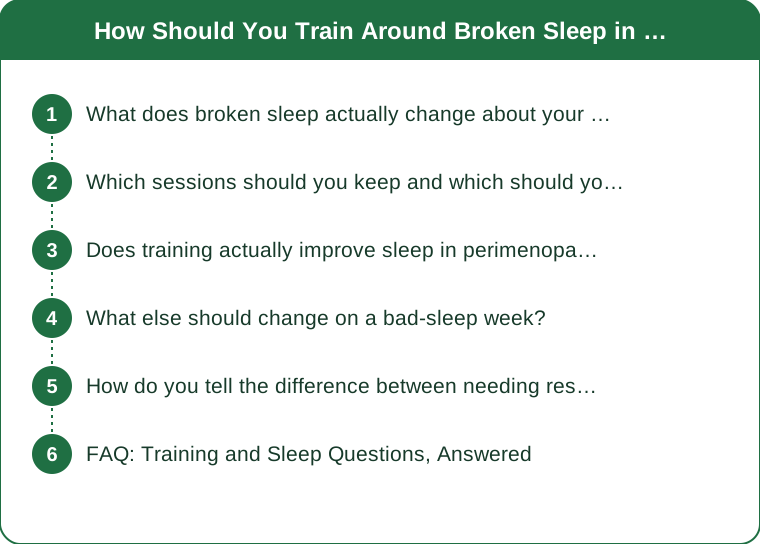
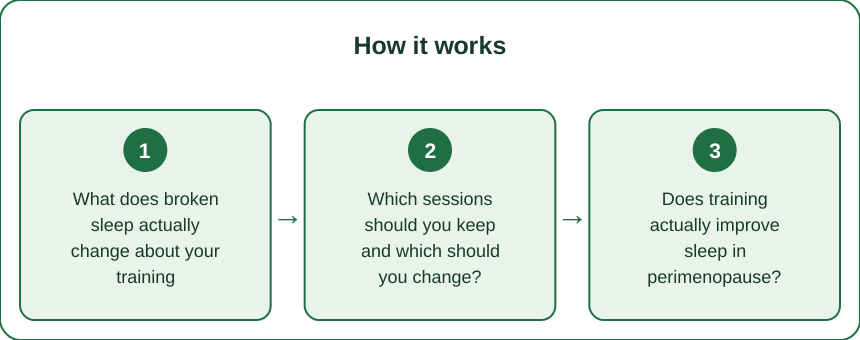
What does broken sleep actually change about your training capacity?
More than you would guess in some areas and less in others.
Maximal strength drops less than people expect. After a poor night, one-rep maximum strength typically declines modestly. You can still lift heavy; you just have less in reserve.
Repeated effort and endurance suffer more. Time to exhaustion and the ability to repeat quality sets drop noticeably. Set five feels far worse than set one.
Perceived effort rises substantially. The same load feels heavier. This is the most consistent finding and the one you experience directly.
Coordination and reaction time decline. Anything technical, fast or requiring balance is genuinely worse and carries a higher injury risk.
Recovery between sessions slows. Growth hormone release is concentrated in deep sleep, and fragmented sleep reduces it.
Appetite regulation shifts. Poor sleep raises hunger hormones and reduces satiety signals, which is why bad sleep weeks and difficult eating weeks tend to coincide. That is physiology, not willpower.
Which sessions should you keep and which should you change?
A clear hierarchy, from most to least worth protecting.
Keep: moderate strength training. This is the most valuable thing you do in perimenopause for bone density, muscle mass and metabolic health, and it holds up reasonably well on poor sleep. Reduce load by 10 to 20 percent and keep the movement pattern and the sets.
Keep: easy aerobic work. Walking, easy cycling, easy swimming. It genuinely aids sleep that night and costs almost nothing in recovery.
Move: high-intensity intervals. These demand the most and deliver the least on a fatigued system. Push them to a better-sleep day rather than doing a poor version.
Move: heavy single or double repetitions and anything technical. Reduced coordination plus maximal load is the combination worth avoiding.
Reduce, do not delete: total volume. Cutting sets is better than cutting sessions. Showing up at 70 percent maintains the habit, the adaptation and the sleep benefit; skipping does none of those.
A practical rule: if you slept badly, keep the session and remove the last set of everything. It is almost always the right adjustment.
Does training actually improve sleep in perimenopause?
Yes, and the effect is one of the better-supported non-pharmacological interventions available.
Regular exercise improves sleep quality and reduces time to fall asleep in midlife women across multiple trials. The effect builds over weeks, not days.
Resistance training specifically shows good results, including in women reporting menopause-related sleep disturbance.
Timing matters somewhat. Vigorous exercise finishing within an hour of bed can delay sleep onset in some people. Morning and afternoon are the safer defaults, though many people tolerate evening training fine — it is worth testing rather than assuming.
Consistency beats intensity. Three moderate sessions a week done reliably outperform two hard ones and a week off.
It will not fix everything. Night sweats and hormonally driven waking are not fully solved by exercise. Training improves the sleep you can control; it does not remove the underlying driver.
This is general information, not medical advice. Persistent insomnia, severe night sweats, or sleep disruption affecting daily function warrant a conversation with a doctor — there are effective treatments, and enduring it is not the only option.

What else should change on a bad-sleep week?
Four adjustments that matter more than the training tweak itself.
Protein becomes more important, not less. Aim for 1.6 to 2.2g per kg bodyweight, spread across the day. Poor sleep impairs muscle protein synthesis, and adequate protein partially offsets it.
Watch the caffeine creep. A bad night produces more coffee, which produces another bad night. Cut it off by early afternoon — caffeine has a half-life of around five to six hours, so a 4pm coffee is still meaningfully present at bedtime.
Keep the wake time fixed. Sleeping in after a bad night feels sensible and undermines the following night. Fixed wake time is the single most effective sleep-hygiene lever.
Add a short walk outdoors in the morning. Daylight early in the day is a strong circadian signal, and it is more useful than any evening intervention.
Do not add a hard session to ‘earn’ better sleep. Excessive training on an already fatigued system worsens sleep rather than improving it.
Seasonal note: as mornings get darker, that early daylight signal becomes harder to get and sleep timing tends to drift later. Getting outside within an hour of waking matters more in autumn than at any other time of year, even on a grey day — outdoor light on an overcast morning is still many times brighter than indoor lighting.
How do you tell the difference between needing rest and needing to show up?
A few honest markers, because the feeling itself is not reliable.
Resting heart rate elevated by more than about 5 beats for several days suggests accumulated fatigue rather than a single bad night.
Performance dropping across sessions, not just within one. One flat session is noise. Three in a row is a signal.
Motivation versus capacity. If you feel awful but perform normally in the warm-up, train. If the warm-up itself feels wrong, reduce.
Use the warm-up as the test. Do the first two sets at planned load. If they move well, continue. If they do not, drop 10 to 20 percent and complete the session anyway.
Persistent soreness, disrupted appetite and worsening sleep together suggest genuine overreaching and warrant a lighter week.
The default should be showing up reduced, not staying home. Across a year, the people who train consistently at moderate intensity through imperfect weeks do considerably better than the people who train hard when they feel good and skip when they do not.
Three quick questions people always ask
Is one bad night enough to change my plan? Usually not — reduce the last set and continue.
Should I train at all after two hours’ sleep? Walk instead. That is the one case where the session is not worth it.
Will I lose progress on a reduced week? No. Muscle and strength are retained comfortably across a lighter week, and often for much longer.
FAQ: Training and Sleep Questions, Answered
Should I skip training after a bad night?
Usually no. Reduce load by 10 to 20 percent, drop the last set, and keep the session.
What should I cut first?
High-intensity intervals and technical or heavy single-rep work. Keep moderate strength and easy aerobic work.
Does evening training hurt sleep?
Vigorous exercise within about an hour of bed can delay sleep onset for some people. Test it rather than assuming.
How long before training improves my sleep?
Typically several weeks of consistent training. It is a cumulative effect, not an overnight one.
Should I sleep in to catch up?
Keep the wake time fixed. Catching up shifts your rhythm and makes the next night worse.
Is more protein really necessary?
1.6 to 2.2g per kg supports muscle retention, which matters more in perimenopause and more again when sleep is poor.
When should I see a doctor?
Persistent insomnia, severe night sweats, or sleep problems affecting your daily function. Effective options exist and are worth discussing.
TL;DR:
- Broken sleep hits repeat efforts, coordination and perceived effort hardest — maximal strength holds up better.
- Keep moderate strength work and easy aerobic sessions; move intervals and technical heavy work to a better day.
- Reduce by 10 to 20 percent and drop the last set rather than skipping entirely.
- Fixed wake time, morning daylight and an early caffeine cutoff matter more than the training change itself.
- Training improves sleep over weeks — stopping is usually the wrong response.
Next bad night, do the session with the last set removed. It is nearly always the right call.
Keep Reading
This article is for general informational and styling purposes only. Fit, sizing, and product availability may vary.