Menopause Weight Gain and Exercise: What's Actually True vs What Gets Repeated
Quick Answer: Exercise alone won’t reverse menopause-related weight redistribution, but strength training specifically helps offset the muscle loss and metabolic slowdown that make it harder to manage weight during this transition. Cardio alone tends to underdeliver here.
You’ve probably been told to “just move more,” tried it, and watched the scale barely budge — while your shape shifted anyway. That’s not a discipline problem. It’s a hormone and muscle-mass problem that responds to a specific type of exercise more than others.

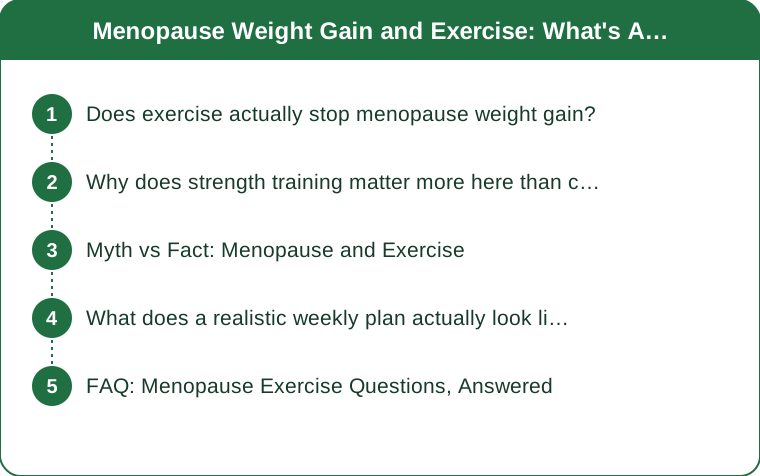
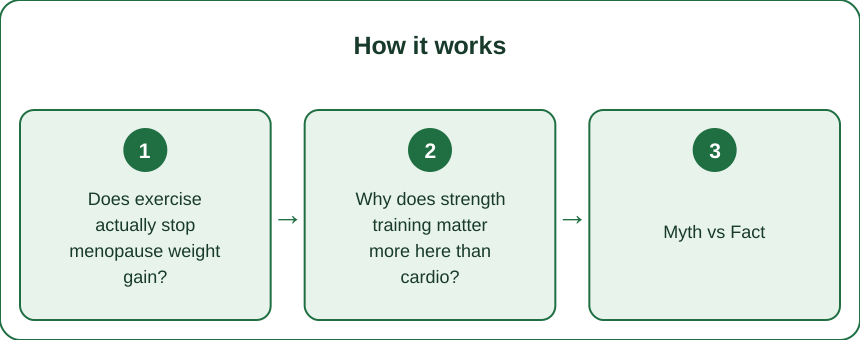
Does exercise actually stop menopause weight gain?
Not entirely, and that’s worth saying plainly. Declining estrogen changes where fat is stored (more abdominal) and speeds up muscle loss, which lowers your resting metabolic rate regardless of activity level. Exercise doesn’t reverse the hormonal shift itself.
What it does do: preserve and rebuild muscle mass, which directly protects your metabolic rate, and improve insulin sensitivity, which affects how your body stores the calories you do eat. That’s a real, measurable effect — just not the same as “burn it off with cardio.”
Why does strength training matter more here than cardio?
Because the core issue is muscle loss (sarcopenia), not just calorie burn. After menopause, muscle loss can accelerate to 1-2% per year without resistance training. Since muscle is metabolically active tissue, losing it lowers the number of calories you burn just existing.
Strength training 2-3x a week, hitting all major muscle groups, is the single most evidence-backed intervention for this specific problem. Cardio burns calories during the session; strength training changes your baseline metabolism between sessions — which matters more over months and years.

Myth vs Fact: Menopause and Exercise
Myth: more cardio is always the answer for weight gain. Fact: excessive cardio without strength work can actually accelerate muscle loss, working against you.
Myth: you need to exercise for hours to see change. Fact: 3 strength sessions of 30-40 minutes weekly outperforms daily 20-minute cardio for this specific issue.
Myth: weight gain means you’re doing something wrong. Fact: some redistribution is a normal hormonal shift — the goal is managing it well, not eliminating it entirely.
What does a realistic weekly plan actually look like?
2-3 full-body strength sessions (45 min, hitting legs, back, chest, core), 1-2 lower-intensity cardio sessions (walking, cycling — 30-40 min for heart health, not weight loss), and daily movement outside workouts (steps, stairs) which matters more post-menopause than pre-menopause because resting metabolism has dropped.
Protein intake matters here too — aim for 25-30g per meal to actually use the muscle-building signal from strength training; without enough protein, the workouts do less than they could.
FAQ: Menopause Exercise Questions, Answered
Is it too late to start strength training in my 50s or 60s?
No — studies consistently show muscle gains at any age when resistance training is introduced, even for people who’ve never lifted before. Start with 2 sessions a week and build from there.
Can exercise help with hot flashes too?
Moderate evidence suggests regular exercise, especially combined with better sleep habits, can reduce hot flash frequency slightly for some people — it’s not guaranteed but it’s a reasonable secondary benefit.
Should I talk to a doctor before starting?
If you have joint issues, heart conditions, or haven’t exercised in years, yes — get cleared first. This is general information, not medical advice.
TL;DR:
- Exercise doesn’t reverse the hormonal shift, but strength training protects against the muscle loss driving the metabolic slowdown
- Strength training matters more than cardio here — aim for 2-3 sessions weekly
- Pair with 25-30g protein per meal to actually use the muscle-building signal
- Some weight redistribution is a normal part of the transition, not a discipline failure
The goal isn’t fighting your body back to a pre-menopause baseline — it’s building the muscle that makes this decade feel strong.
Keep Reading
This article is for general informational and styling purposes only. Fit, sizing, and product availability may vary.