Sleep After 45: Why It Changed and the Rebuild Plan That Actually Works
Quick Answer: Sleep changes after 45 because falling estrogen and progesterone fragment your sleep architecture, hot flashes wake you, and cortisol spikes around 3am. The fastest fixes, in order: drop the bedroom to 63-65°F (17-18°C), hold one wake time seven days a week, and run a two-week alcohol experiment. If those don’t move the needle in a month, ask a doctor about HRT, sleep apnea, and CBT-I.
You fall asleep fine. Then it’s 3:07am, you’re wide awake, warm, and doing math on how many hours are left.
The sleep that carried you through your twenties, thirties, and two kids just quietly stopped working. Nothing in your life changed — but your nights did.
Here’s the good news: midlife sleep breaks in predictable ways, which means it rebuilds in predictable ways too.

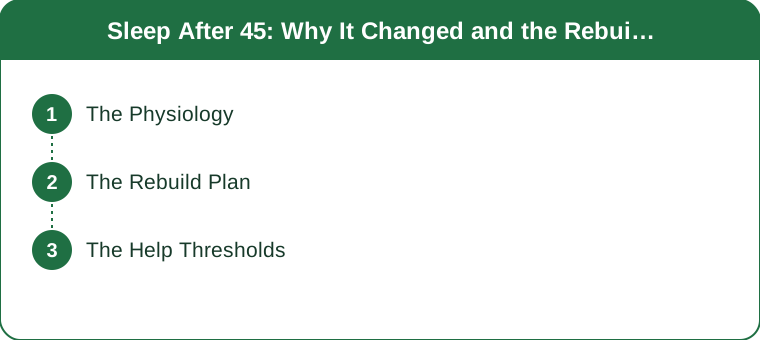
Why Does Sleep Get Worse After 45?
Four things stack up at once, and it’s the stacking that makes it feel sudden.
Hormones shift the architecture. Progesterone has a naturally calming, sleep-promoting effect, and as it declines, that built-in sedative goes with it. Falling estrogen drives the hot flashes and night sweats that fragment sleep — and night waking is the single most common complaint women bring to menopause appointments.
Deep sleep thins with age. This part is normal, not broken. The slow-wave sleep that dominated your twenties gets lighter and more interruptible in every adult, regardless of hormones. Sorting “normal aging” from “fixable problem” matters, because chasing the sleep you had at 25 is a losing game.
The life load peaks. Mid-forties is the sandwich decade: career at its most demanding, teenagers, aging parents. Cortisol naturally starts climbing in the pre-dawn hours to wake you up — and a stressed system runs that climb early and loud. That’s your 3am.
The body wakes you. More bathroom trips, more joint aches, more of everything that used to be silent at night.
Then the cycle closes: you start dreading bedtime, and sleep anxiety becomes its own insomnia. Clock-watching at 3am is the accelerant.

What’s the Rebuild Plan, in Priority Order?
Don’t do all five at once. Do them in this order — the first three carry most of the result.
Priority 1 — Win the temperature war. Set the bedroom to 63-65°F (17-18°C). Layer your bedding so you can shed a layer at 2am without fully waking, and swap flannel pajamas for moisture-wicking sleepwear. A $30 fan is, unglamorously, the most effective insomnia treatment of this decade for a lot of women.
Priority 2 — Anchor your wake time. Same wake time, seven days a week, including Saturday. Weekend sleep-ins feel like repayment but they re-jetlag a circadian rhythm that’s already less stable than it used to be. Pair it with 10-15 minutes of outdoor light within an hour of waking.
Priority 3 — Audit the alcohol. Alcohol’s effect on sleep gets measurably worse with age, and the evening glass of wine hits midlife sleep twice: it knocks you out early, then fragments the second half of the night and amplifies hot flashes. Run a strict two-week zero-alcohol test. This is the intervention that surprises people most.
Priority 4 — Build a 3am protocol. When you wake, do not look at the clock. Give it about 20 minutes; if sleep hasn’t returned, get up, go somewhere dim, and do something boring — a dull podcast, a paperback, not your phone. The goal is protecting the bed-equals-sleep association, because lying there frustrated teaches your brain that bed is where you’re awake and annoyed.
Priority 5 — Time your training. Strength work 2-3 times a week and daily walking both deepen sleep. Just finish hard sessions at least 3 hours before bed — a 9pm HIIT class and a 10:30pm bedtime are working against each other.
Supporting cast: caffeine curfew at noon if you’re sensitive, a magnesium conversation with your doctor, and a genuine 30-minute wind-down that isn’t scrolling.
Myth vs Fact: Midlife Sleep
Myth: “Everyone needs 8 hours.” Fact: Adult need ranges roughly 7-9 hours. How you feel at 4pm is a better gauge than the number on your tracker.
Myth: “A nightcap helps me sleep.” Fact: It helps you fall asleep and wrecks the back half of the night. This gets worse, not better, with age.
Myth: “Waking at night is always a problem.” Fact: Brief wakings are normal at every age. It’s the inability to get back down — and the daytime consequences — that flags something fixable.
Myth: “Menopause insomnia is just something to wait out.” Fact: It’s one of the most treatable symptoms of the transition, and it responds to both behavioral and medical options.
Myth: “Sleep apnea is a man’s problem.” Fact: Women’s apnea risk rises sharply after menopause, and it’s badly underdiagnosed in this exact group.
When Should You See a Doctor About Sleep?
Self-help has a ceiling. Cross it and get help.
The HRT conversation. Hormone therapy is the most effective treatment available for hot flashes for many women, and the sleep improvement often follows. Risks and benefits are individual — the point is having the conversation with a menopause-literate clinician rather than ruling it out based on decades-old headlines.
Apnea screening. If you snore, gasp, or wake unrefreshed no matter how long you were in bed, ask for a sleep study. Post-menopausal women are the most under-screened group for this.
CBT-I. Cognitive behavioral therapy for insomnia is the recommended first-line treatment for chronic insomnia and outperforms sleeping pills long-term. It’s available through apps and specialists.
Also worth naming to your doctor: restless legs, chronic pain, thyroid symptoms, and any medication you started around the time sleep changed. Sleeping pills are a short-term bridge, not a plan.
Mini FAQ
Why do I wake up at 3am every single night?
It’s usually the collision of a cortisol rise that naturally begins in the pre-dawn hours with a hot flash or a lighter sleep stage. The consistency of the timing is a feature of your body clock, not a sign something is seriously wrong.
How long until the rebuild plan works?
Give temperature and wake-time changes about two weeks and the alcohol test a full two weeks on its own. Most people see meaningful change within a month; if you’ve done all three honestly and nothing moved, that’s your signal to book an appointment.
Will melatonin fix menopause insomnia?
Melatonin helps with timing problems — jet lag, shifted schedules — more than with the fragmented, hot-flash-driven waking of midlife. It’s low-risk to try, but it’s not the main lever here.
TL;DR:
- Midlife sleep breaks on four fronts: hormones, normal age-related thinning of deep sleep, peak life stress, and a body that wakes you more.
- Fix in order: bedroom at 63-65°F with layered bedding and wicking sleepwear → one fixed wake time seven days a week → a two-week alcohol experiment.
- At 3am: no clock, 20-minute rule, get up and do something boring in dim light.
- Finish hard workouts 3+ hours before bed; caffeine curfew at noon if sensitive.
- Escalate to a doctor for HRT, apnea screening (risk rises after menopause), and CBT-I before relying on pills.
Keep Reading
This article is for general informational and styling purposes only. Fit, sizing, and product availability may vary.