Why Strength Gains Slow Down Mid-Perimenopause (Even When Training Doesn't Change)
Quick Answer: Fluctuating and declining estrogen during perimenopause reduces muscle protein synthesis efficiency and recovery capacity, which can slow strength gains even with unchanged training. Adjusting recovery time, protein intake, and training volume — not just pushing harder — is what typically restarts progress.
You’ve followed the same progressive program for two years, gains came steadily, and then somewhere in your mid-to-late 40s, progress that used to show up every few weeks started taking months. Nothing about your training changed. Something else did.

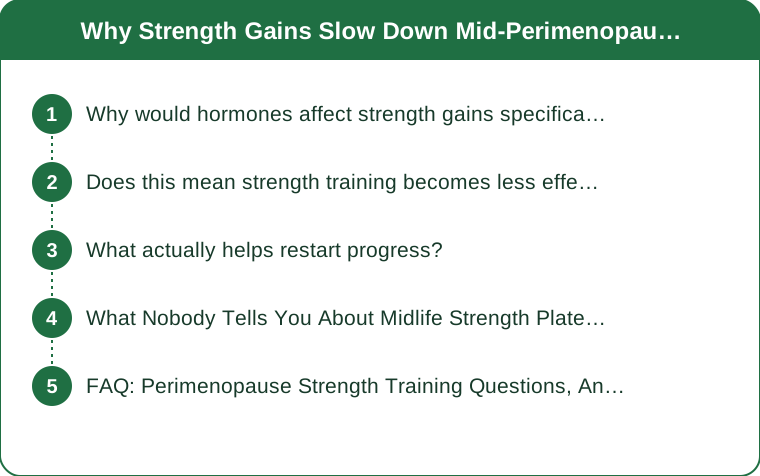
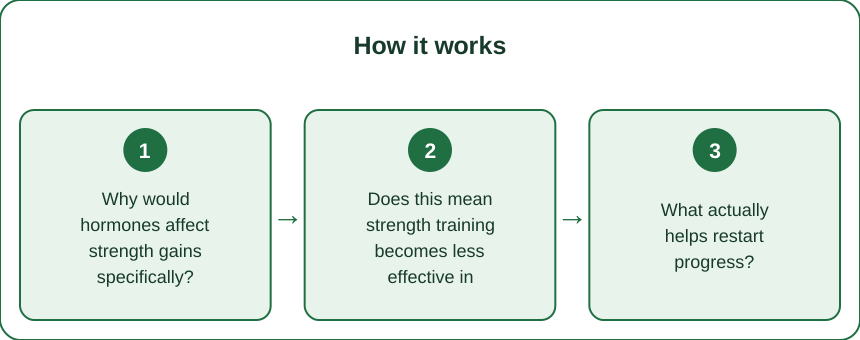
Why would hormones affect strength gains specifically?
Estrogen plays a meaningful role in muscle protein synthesis — the process by which your body repairs and builds muscle tissue after training. As estrogen fluctuates and generally declines through perimenopause, that process becomes measurably less efficient, even when training stimulus stays identical.
Estrogen also influences collagen production and joint health, which affects recovery capacity and injury resilience — two things that directly determine how much productive training volume you can actually handle week to week.
Does this mean strength training becomes less effective in perimenopause?
No — if anything, strength training becomes more important, not less effective. It’s specifically protective against the muscle and bone density loss that accelerates during this hormonal transition. What changes is the pace of visible gains, not whether the training works.
This distinction matters: slower progress isn’t a sign to stop or reduce strength training — it’s a sign to adjust expectations and supporting factors around it.

What actually helps restart progress?
- Increase protein intake. Research increasingly points to higher protein needs (often above general population recommendations) supporting muscle maintenance through this transition — many women benefit from closer to 1.6-2.0g per kg bodyweight, spread across meals.
- Prioritize recovery between sessions. The same training frequency that worked at 35 may need an extra rest day at 48 for muscles to fully recover and adapt.
- Don’t abandon progressive overload — adjust its pace. Smaller, more gradual weight increases sustained consistently often outperform trying to force the same jump pace as before.
- Prioritize sleep. Sleep disruption is common in perimenopause and directly undermines the recovery window your muscles need to actually adapt to training.
What Nobody Tells You About Midlife Strength Plateaus
Here’s what most generic fitness content skips: a strength plateau during perimenopause is not the same problem as a plateau at 30, and copying advice designed for a 30-year-old’s hormonal environment (just add more volume, just push harder) can backfire into overtraining and injury.
The fix isn’t more effort. It’s often less volume with more deliberate recovery and protein support — a genuinely different equation than earlier in life, not a smaller version of the same one.
FAQ: Perimenopause Strength Training Questions, Answered
Should I reduce my training frequency during perimenopause?
Not necessarily reduce — but many women benefit from redistributing intensity, with slightly more recovery time between the hardest sessions.
Does hormone therapy affect strength training results?
Some research suggests hormone therapy may support muscle maintenance in perimenopause, but this is a personal medical decision — discuss it with a doctor familiar with your full health picture, not a fitness plan alone.
Is it normal for strength gains to stop entirely, not just slow down?
A temporary plateau is common, but a complete, prolonged stop despite adjusted training, protein, and recovery is worth discussing with a doctor to rule out other contributing factors.
TL;DR:
- Declining, fluctuating estrogen reduces muscle protein synthesis efficiency, slowing visible gains
- Strength training remains essential during perimenopause — the pace of progress changes, not its value
- Higher protein intake, added recovery time, and quality sleep typically restart progress
- Copying a 30-year-old’s ‘just push harder’ advice can backfire into overtraining at this stage
Slower gains reflect a genuinely different hormonal environment, not declining effort or a training program gone wrong. This is general information, not medical advice.
Keep Reading
This article is for general informational and styling purposes only. Fit, sizing, and product availability may vary.