Lifting Weights in Midlife: the Unexpected Effects on Hot Flashes and Sleep
Quick Answer: Resistance training keeps earning its place as midlife’s best exercise investment: beyond the established bone-density and muscle-preservation case, research links regular strength work with reduced hot flash frequency in some studies, and resistance exercise consistently associates with deeper, better-consolidated sleep — two of perimenopause’s most disruptive symptoms. The dose that appears in the research: 2-3 sessions weekly, moderate loads, progressed patiently. Not a cure, not a replacement for medical care — but a lever with unusually broad returns. This is general information, not medical advice.
The midlife strength-training pitch usually leads with bones and metabolism — important, and apparently not persuasive enough, given the numbers still lifting. Maybe the closer is this: the barbell may also help with the 3am wake-ups and the personal weather system.

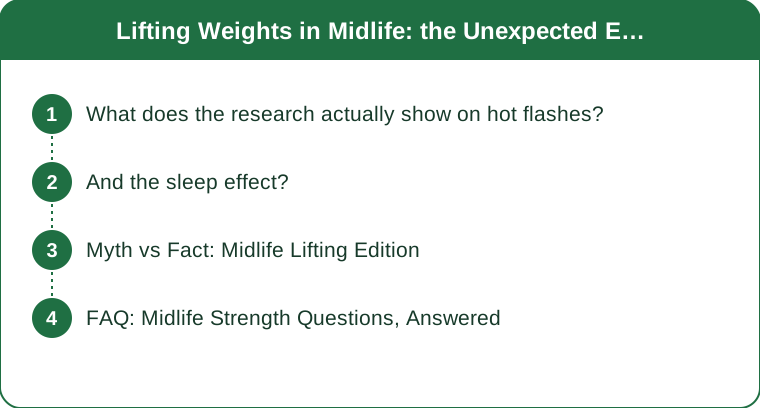
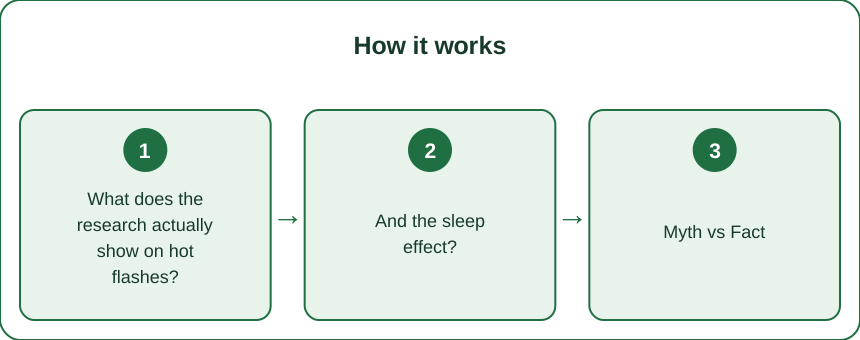
What does the research actually show on hot flashes?
The honest state of the evidence: intriguing, not settled —
- A notable randomized trial had postmenopausal women with frequent hot flashes complete 15 weeks of resistance training (3 sessions weekly) and found the training group’s hot flash frequency dropped by roughly half versus controls — one of the more striking non-hormonal findings in the symptom literature.
- Follow-on and related studies show mixed-but-promising results; mechanisms remain under investigation (proposed candidates involve thermoregulatory adaptation and neuroendocrine effects of training).
- The fair summary: resistance training is not a proven hot-flash treatment, but it’s one of the few lifestyle interventions with trial evidence pointing the right direction — and its other benefits are so established that the bet costs nothing even if the flash effect proves modest for you personally.
Worth placing alongside: the exercise-symptom relationship runs opposite to many women’s instinct — the fear that workouts trigger flashes keeps some away from training, when overheating-during-exercise and baseline flash frequency are different phenomena, and the training adaptations (better thermoregulation, fitness) generally point toward less symptom burden over time, not more.
And the sleep effect?
Here the evidence is broader and steadier:
- Resistance exercise and sleep quality: meta-analyses of resistance-training trials find consistent improvements in sleep quality — some analyses rank it comparable to or better than aerobic exercise for this outcome — with effects on sleep onset, efficiency, and the subjective depth that midlife sleep loses first.
- The midlife relevance: perimenopausal sleep disruption is multi-source (night sweats, 3am cortisol-adjacent waking, mood effects) — training addresses several channels at once: deeper slow-wave pressure from the physical stimulus, anxiety reduction (resistance training shows meaningful effects on anxiety symptoms in trials), and possibly the night-sweat channel via the hot-flash findings above.
- The timing detail: finish intense sessions 2-3 hours before bed (late hard training can delay sleep onset — the same rule as all exercise), which for most schedules means morning or early-evening lifting.
The compound-interest frame: sleep is also where training adaptations consolidate — so the barbell-sleep relationship runs both directions, and improving either strengthens the other. Few midlife interventions offer that kind of loop.

Myth vs Fact: Midlife Lifting Edition
Myth: It’s too late to build real muscle after 50. Fact: Training studies in women 50+ (and 60+, and 80+) show robust strength and muscle gains — the tissue responds at every studied age; only the recovery spacing changes. ‘Too late’ remains the most expensive myth in the category.
Myth: Heavy weights are dangerous for midlife joints and bones. Fact: Progressive resistance training is precisely what the bone-density evidence recommends — mechanical load is the signal bones rebuild to, and properly progressed lifting is joint-protective (stronger muscles absorb what joints otherwise take). The dangerous pattern is the opposite: avoiding load while bones and muscle quietly de-adapt. (Existing conditions — osteoporosis diagnoses, joint replacements — shape the programming; that’s a clinician-and-qualified-trainer conversation, not a reason to abstain.)
Myth: Cardio is the menopause exercise; weights are optional extra. Fact: The symptom-and-health ledger keeps assigning resistance training the jobs cardio can’t do — bone density, muscle preservation against the estrogen-decline acceleration, metabolic protection, and now the sleep-and-flash findings above. The evidence-based prescription is both, with strength as the non-negotiable core, not the garnish.
The pattern: every myth steers midlife women away from the modality with the broadest midlife-specific returns — and the research keeps quietly widening that return column. This is general information, not medical advice.
FAQ: Midlife Strength Questions, Answered
What does a realistic starting program look like?
The evidence-pattern dose: 2-3 sessions weekly, 45-60 minutes, built on the big patterns (squat/hinge/push/pull/carry variations), starting at loads that leave 2-3 comfortable reps in reserve and progressing gradually. Absolute beginners: a few sessions with a qualified trainer to groove patterns is the highest-value spend in the whole journey.
How long before I might notice sleep or flash changes?
The trial timelines: sleep-quality improvements often register within 8-12 weeks; the hot-flash trial ran 15 weeks. Strength changes arrive faster (neurological gains in 3-4 weeks) — which conveniently provides the motivation bridge while the symptom effects accrue.
Can I get these effects from bands and bodyweight at home?
Meaningfully, yes — progressive tension is the active ingredient, and bands/bodyweight progressed honestly (harder variations, slower tempos, more range) carry beginners far. The bone-density signal favors progressively heavier loading over time, which eventually argues for weights — but the best program remains the one that actually happens 2-3 times weekly. This is general information, not medical advice.
TL;DR:
- Beyond bones and muscle: trial evidence links resistance training with roughly halved hot-flash frequency (promising, not proven) and consistently better sleep quality
- The research dose: 2-3 weekly sessions, moderate progressive loads, hard training finished 2-3 hours before bed
- Muscle and bone respond at every studied age — ‘too late’ is the costliest myth in midlife fitness
- Not a treatment substitute; a broad-return lever alongside medical care
The barbell was already midlife’s best investment on the bone ledger — the sleep-and-flash columns are just the returns nobody advertised. This is general information, not medical advice.
Keep Reading
This article is for general informational and styling purposes only. Fit, sizing, and product availability may vary.