Starting Strength Training in Menopause: The Best-Timed Decision in Fitness
Quick Answer: Menopause accelerates muscle loss, bone density loss, and metabolic change at the same time — and progressive resistance training is the one intervention that answers all three. Start with two sessions a week of compound basics (squat, press, row, hinge), using weights heavy enough to be genuinely challenging by rep ten. Strength gains typically show up within weeks. This is general information, not medical advice.
Estrogen leaving does three things at once: muscle declines faster, bone density drops, and your metabolism starts renegotiating terms.
Which makes menopause sound like the worst possible time to start lifting weights. It’s very close to the opposite — it’s arguably the single best-timed moment there is, because one habit happens to answer all three questions.

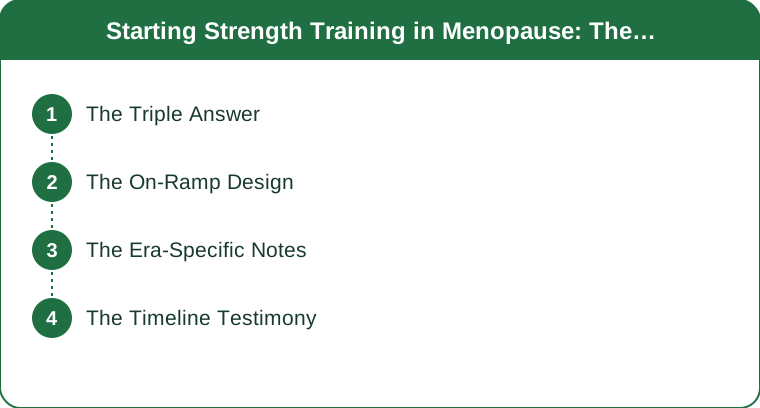
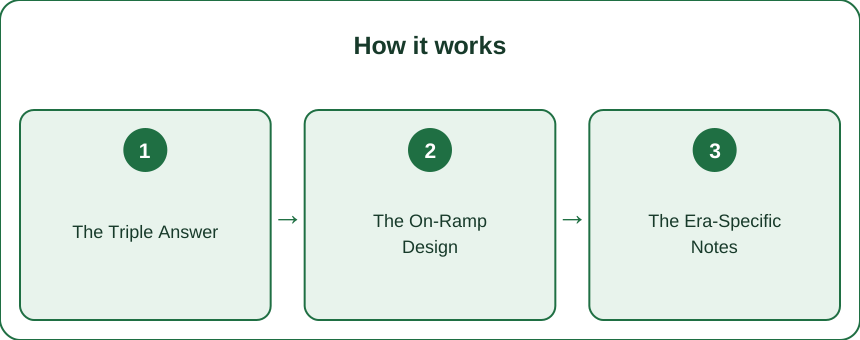
Why Is Strength Training the Right Answer for Menopause?
Because it’s the counter-signal to all three problems simultaneously.
Muscle. Estrogen has a protective effect on muscle tissue, and its decline accelerates the age-related loss that was already happening. Progressive resistance training is the only reliable way to reverse that direction — and muscle at 55 responds to honest loading much the way it does at 25, just on a slightly longer clock.
Bone. This is where the evidence is most emphatic. Bone density responds to mechanical loading, and resistance training with meaningful weight is the strongest non-pharmaceutical stimulus available. Walking helps a little. Loading helps considerably more. The window during and shortly after menopause is when bone loss runs fastest, which is exactly why it’s the window that matters most.
Metabolism. Muscle is metabolically active tissue. Building and defending it protects the resting metabolic rate that midlife keeps trying to renegotiate downward — and it does more for body composition than any amount of additional cardio.
One habit. Three audits answered. That’s an unusually good return.
How Should You Start? (The On-Ramp)
Two sessions a week is enough to start, and it’s enough to keep working for a long time.
The movements: four compound patterns cover almost everything.
- Squat pattern — goblet squat, leg press, or a machine squat
- Press — dumbbell shoulder press or chest press
- Row — seated row or a dumbbell row
- Hinge — Romanian deadlift, hip thrust, or a back extension
Machines are completely legitimate here, especially at the start. They’re stable, easy to learn, and they let you load meaningfully without a coach standing next to you.
Sets and reps: 2–3 sets of 8–12 reps per movement. That’s it. A session is 35–45 minutes.
The weight is the part people get wrong. The last two or three reps of a set should be genuinely hard. If you could do five more, it’s too light — and being under-loaded is this demographic’s classic failure mode. The three-pound dumbbell held forever is the single most common reason women in midlife don’t see results from lifting.
Progression must be real. Add a small amount of weight, or a rep, whenever a set stops being challenging. Patient is fine. Static is not.

What’s Different About Training in This Era?
Four adjustments, none of them limiting:
Recovery earns more respect. 48–72 hours between sessions working the same muscles. Two sessions a week with three days between them is genuinely ideal, not a compromise.
Warm-ups graduate from optional to mandatory. Five to ten minutes — light cardio, then the first movement done with an empty bar or very light weight. Tissue tolerance changes in midlife and this is where injuries get prevented.
Protein needs rise. Midlife brings anabolic resistance, meaning your body needs more protein per meal to trigger the same muscle-building response. Roughly 1.2–1.6g per kg of body weight per day, spread across meals rather than concentrated in one, with 25–30g per meal as a working target.
Sleep becomes the adaptation engine. Muscle is built during recovery, not during the session. Sleep is already renegotiating in menopause, which makes protecting it more important rather than less.
What Nobody Tells You About Starting in Your 50s
- Strength arrives startlingly fast. The first 4–8 weeks of gains are largely neurological — your nervous system learning to recruit muscle it already has. You’ll be lifting noticeably more before you look any different, and that’s normal, not a trick.
- Energy and sleep usually improve before body composition does. Most people report this order: strength, then energy, then sleep, then the visible changes. If you’re judging by the mirror at week three, you’ll quit right before it starts working.
- The bone benefit is invisible for years. A DEXA scan five years from now is where that shows up. It’s the least satisfying and most valuable thing on this list.
- You will not get bulky. Lower testosterone and declining estrogen make substantial muscle gain slow and effortful. This fear costs more women results than any other single belief.
- Two sessions beats five planned sessions. A program you complete every week outperforms an ambitious one you abandon in month two.
- Hot flushes during training are common and usually manageable — train in a cool room, layer, hydrate, and rest a little longer between sets if you need to.
When to see a professional: talk to your doctor before starting if you have diagnosed osteoporosis or osteopenia, a history of fractures, heart conditions, or joint problems — some spinal-loading and flexion movements need modifying with low bone density. A few sessions with a qualified trainer who works with midlife clients is a genuinely good investment for learning the four movements safely.
FAQ
Is it too late to start lifting weights at 55?
No — and the timing is arguably better than earlier, because the problems lifting solves are the ones this era creates. Meaningful strength gains are well documented in people starting in their 60s, 70s, and beyond.
How often should menopausal women strength train?
Two sessions a week is a realistic, effective starting point, with 48–72 hours between them. Three works well once you’ve adapted. More than that adds recovery demand faster than it adds benefit for most beginners.
Does strength training help with menopause weight gain?
It helps with body composition more than with the number on the scale. Building muscle protects your metabolic rate and changes shape even when weight is stable — which is usually the change people are actually after.
TL;DR
- Menopause hits muscle, bone, and metabolism at once; lifting answers all three.
- Two sessions a week, four patterns: squat, press, row, hinge.
- 2–3 sets of 8–12, with the last few reps genuinely hard. Too light forever is the classic mistake.
- Progression must be real — add weight or reps as sets get easy.
- 48–72 hours recovery, mandatory warm-ups, 1.2–1.6g protein per kg per day, protected sleep.
- Strength shows in weeks, energy and sleep follow, the bone benefit shows on a scan years later.
- Osteoporosis, fractures, or heart or joint conditions — check with your doctor first.
Keep Reading
This article is for general informational and styling purposes only. Fit, sizing, and product availability may vary.