How Should Strength Training Weight Actually Progress During Perimenopause?
Quick Answer: Strength progression during perimenopause often needs to slow down and become less linear than in earlier decades, prioritizing consistency and recovery over steady week-to-week weight increases, since hormonal fluctuations affect recovery capacity in ways that make a rigid progression schedule less reliable.
Slower or less consistent progress during perimenopause isn’t a sign that strength training has stopped working — it’s a sign the progression approach may need to adapt to what the body is actually going through.

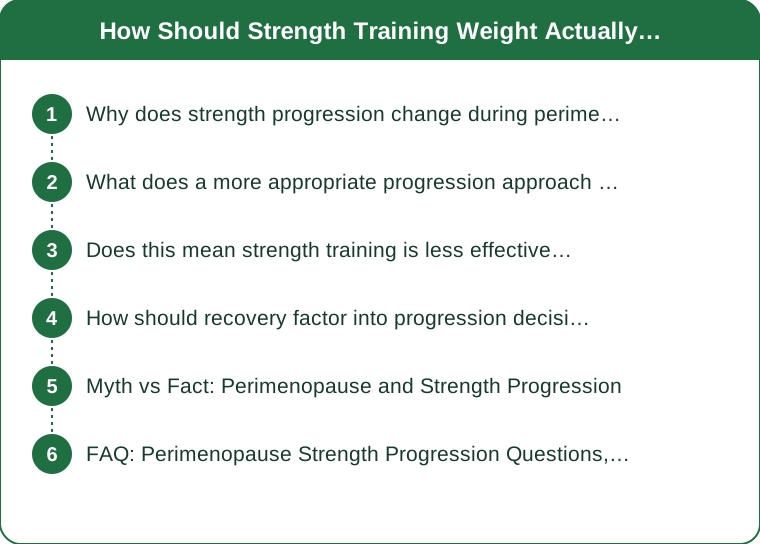
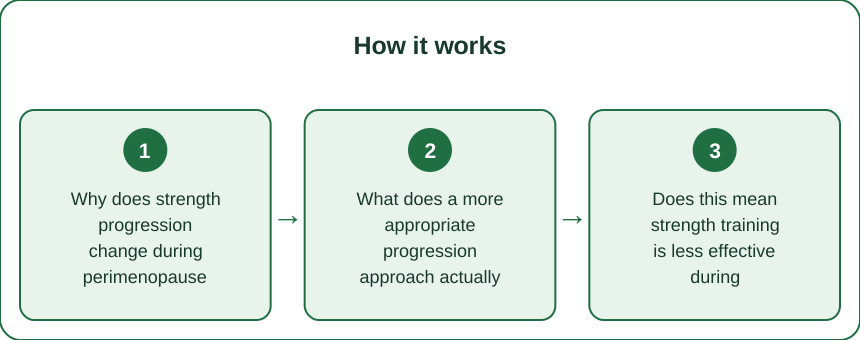
Why does strength progression change during perimenopause specifically?
Fluctuating estrogen levels during perimenopause affect recovery capacity, joint comfort, and even motivation in ways that can vary meaningfully from week to week, unlike the more predictable hormonal patterns of earlier adulthood.
This means the assumption behind traditional linear progression — that a small weight increase is achievable most weeks — doesn’t hold as reliably during this transition, even for people with a long, consistent training history.
What does a more appropriate progression approach actually look like?
Many trainers recommend a wave-based or flexible progression model during perimenopause, where weight increases happen when the body signals readiness — good energy, no unusual joint discomfort — rather than on a fixed weekly schedule.
This can mean holding a weight steady for several weeks at a time, or occasionally stepping back slightly during particularly difficult weeks, without treating that as a failure of the program.
Does this mean strength training is less effective during perimenopause?
No — strength training remains one of the most effective tools for supporting bone density, muscle mass, and metabolic health during perimenopause and beyond, even if the week-to-week progression looks different than it used to.
The goal shifts somewhat from maximizing rate of progress to maintaining consistency, which research on this life stage generally supports as the more sustainable long-term priority.

How should recovery factor into progression decisions?
Recovery quality — sleep, stress levels, and how joints feel — becomes a more important input into progression decisions during perimenopause than it may have been in earlier training years.
Tracking these factors alongside training, rather than progression numbers alone, gives a more complete picture of whether a weight increase is actually appropriate that week.
Myth vs Fact: Perimenopause and Strength Progression
Myth: slower progression during perimenopause means training harder is the fix. Fact: pushing progression against reduced recovery capacity often backfires, increasing injury risk rather than accelerating results.
Myth: strength training should be scaled back significantly during perimenopause. Fact: most guidance supports maintaining strength training, just with a more flexible, recovery-informed approach to progression rather than reducing training itself.
FAQ: Perimenopause Strength Progression Questions, Answered
Is it normal to need more rest days during perimenopause?
Yes, many people find they need slightly more recovery time during this transition, and adjusting training frequency accordingly is a reasonable response.
Should someone switch to lighter weights entirely during perimenopause?
Not necessarily — the goal is flexible progression, not automatically reducing weight, since strength stimulus still matters for bone and muscle health.
How long does this less predictable progression phase typically last?
It varies significantly by individual, often tracking with the broader perimenopause transition itself, which can span several years.
TL;DR:
- Strength progression often becomes less linear and predictable during perimenopause
- A flexible, recovery-informed progression approach works better than a fixed weekly increase schedule
- Strength training remains highly effective during this transition, even with adapted progression
- Prioritizing consistency over maximizing progression speed is the more sustainable approach
If strength gains feel less predictable right now, that’s a normal part of this transition — not a sign to stop training.
Keep Reading
This article is for general informational and styling purposes only. Fit, sizing, and product availability may vary.