What Changes in Strength Training After Perimenopause Starts
Quick Answer: Declining oestrogen affects muscle protein synthesis, recovery rate, connective tissue quality, and body composition simultaneously. The practical response is more protein than you needed before, roughly 1.6 to 2.2 grams per kilogram of body weight daily, heavier loads rather than higher reps, more recovery time between hard sessions, and more consistent rather than more intense training. Most women in this stage do better on three well-recovered sessions a week than on five rushed ones, which is the opposite of the usual instinct.
This is a period where the training that worked at 30 genuinely stops working, and that is physiology rather than effort.
This blog has covered why strength training matters more after 40 than cardio, why the same workout feels harder some weeks in perimenopause, and why the same workout triggers a hot flash only some days. This is the programming guide underneath all of it.

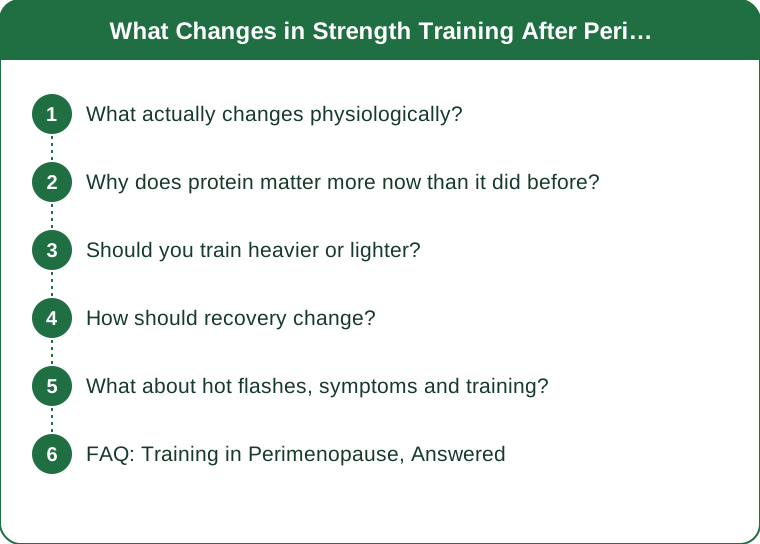
What actually changes physiologically?
Four things, and they interact, which is why the effect feels larger than any one of them explains.
Muscle protein synthesis becomes less responsive. Oestrogen has a role in the muscle-building response to both protein intake and training. As it declines, the same protein dose and the same training stimulus produce a smaller response. This is called anabolic resistance and it is the central mechanism.
Recovery slows. The same session that needed 48 hours at 35 may need 72 at 48. Training on the old schedule means training on incompletely recovered tissue, which accumulates rather than adapts.
Connective tissue changes. Oestrogen influences collagen turnover, and tendon and ligament properties shift during this period. This is part of why tendon complaints, particularly around the shoulder, hip, and Achilles, become more common in this stage.
Body composition shifts independently of training. Fat distribution changes toward the abdomen and lean mass declines with age unless actively defended. This happens even in women whose training and diet did not change at all, which is disorienting and worth naming plainly.
Sleep disruption compounds all of it. Sleep is when most recovery and muscle protein synthesis occurs, and perimenopausal sleep disruption is extremely common. A poor night measurably reduces the next day’s training quality and the following recovery.
And it is not linear. Perimenopause involves fluctuating rather than steadily falling hormones, which is precisely why some weeks feel normal and others feel impossible with no change in what you did.
Why does protein matter more now than it did before?
Because anabolic resistance means you need a larger signal to produce the same response.
The target moves up to roughly 1.6 to 2.2 grams per kilogram of body weight per day. For a 70-kilogram woman that is 112 to 154 grams, which is considerably more than most women eat and considerably more than general guidelines suggest.
Per-meal dose matters, not just the daily total. Aim for 30 to 40 grams per meal across three to four meals. Younger muscle responds well to 20 grams; older muscle needs more per sitting to trigger the same synthesis response.
Distribution across the day beats loading it at dinner. Most people eat very little protein at breakfast and a large amount at dinner, which wastes the morning and evening opportunities.
Protein around training is useful but less important than the daily total. The window is far wider than the old advice implied. Getting the total right matters much more than the timing.
Leucine content specifically drives the response. Animal proteins, dairy, and soy are richest in it. Plant-based eaters generally need a somewhat higher total and more variety to hit the same threshold.
And this is the highest-leverage change available. Of everything on this list, increasing protein produces the most reliable difference, and it is the one most commonly under-done.
Talk to a doctor or dietitian if you have kidney concerns or other medical conditions. This is general information, not medical advice.
Should you train heavier or lighter?
Heavier, which is counterintuitive and consistently supported.
Heavy loads are a stronger stimulus for both muscle and bone. With anabolic resistance reducing the response to any given stimulus, a larger stimulus partially compensates. This is the core programming argument.
Bone density becomes a priority in this period and it responds specifically to load. Light weights for high reps do very little for bone. Heavy compound lifts and impact work do.
Work in the 4 to 8 rep range for main lifts. This means loads around 75 to 85 percent of your one-rep maximum, which for most women is heavier than they have ever trained.
Fewer total sets, higher quality. Three to four hard working sets on a main lift beats six mediocre ones, particularly when recovery capacity is the constraint.
Progressive overload still applies but progresses more slowly. Adding weight every session is no longer realistic. Adding weight every two to three weeks is.
Keep some higher-rep work for connective tissue and joint health. A mix, weighted toward heavy, rather than exclusively heavy. Tendons respond well to controlled moderate-load work and this is a period where tendon health warrants attention.
And build up to it carefully if you are new to heavy training. Technique first, over several months, then load. This is not the moment to compress a learning curve.

How should recovery change?
More of it, and treated as part of the program rather than as its absence.
Three quality sessions a week beats five rushed ones. This is the single most common programming change that helps, and it feels like giving up to people who trained more when they were younger.
Allow 72 hours between hard sessions targeting the same muscles. The 48-hour rule that worked at 30 frequently does not hold now, and training on incomplete recovery produces accumulated fatigue rather than adaptation.
Protect sleep as a training variable. Sleep disruption is extremely common in this stage and it directly reduces the return on every session. A consistent schedule, a cool dark room, and limiting alcohol all have measurable effects here.
Deload every fourth to sixth week. Halve the volume for a week. This is more important now than it was and it is the thing most people skip.
Track how you feel across a cycle if you still have one. Many women find strength and recovery vary predictably across a menstrual cycle during perimenopause, and scheduling harder work in the better weeks is a legitimate strategy.
Distinguish under-recovery from a bad day. A single flat session is normal. Three flat weeks with declining performance and poor sleep is under-recovery and it needs a deload, not more effort.
And do not add cardio to compensate for slower progress. Adding volume when recovery capacity is the limit makes the problem worse. Strength work first, cardio second, and separate them where possible.
What about hot flashes, symptoms and training?
They interact with training in specific ways, and knowing the patterns makes them more manageable.
Exercise heat production can trigger hot flashes in some women and not others, and not consistently. The variability is genuine and it makes it hard to plan around, which is itself worth knowing so you do not conclude you are doing something wrong.
Train in a cooler environment where you can. A cool gym, a fan, and cold water all reduce the likelihood. Layers you can remove quickly are practical rather than fussy here.
Time training away from your worst symptom window if you have one. Many women find evenings worse; if so, morning training is genuinely easier.
Regular exercise is associated with fewer and less severe symptoms overall, even though individual sessions can trigger them. The long-term direction and the short-term experience point different ways, which is confusing and worth stating explicitly.
Strength training in particular has good evidence for this population across bone density, body composition, insulin sensitivity, and mood. It is not just about muscle.
Talk to a doctor about the whole picture, including HRT if relevant. Training is one input among several and the decisions interact. This is general information, not medical advice, and a doctor who is knowledgeable about menopause is genuinely worth seeking out.
And be patient with the timeline. Perimenopause lasts years, not months. Building a training approach that survives the bad weeks matters far more than optimising the good ones.
FAQ: Training in Perimenopause, Answered
How much protein do women need in perimenopause?
Roughly 1.6 to 2.2 grams per kilogram of body weight daily, in doses of 30 to 40 grams per meal across three to four meals. This is higher than general guidelines because muscle becomes less responsive to the same protein dose.
Should I lift heavier or lighter in perimenopause?
Heavier. Work in the 4 to 8 rep range on main lifts, which is roughly 75 to 85 percent of your one-rep maximum. Heavy loads are a stronger stimulus for both muscle and bone, which partly compensates for reduced responsiveness.
Why does the same workout feel harder some weeks?
Perimenopause involves fluctuating rather than steadily declining hormones, and sleep disruption compounds it. Week-to-week variation with no change in your training is expected. Persistent decline over several weeks means under-recovery and calls for a deload.
TL;DR:
- Anabolic resistance, slower recovery, connective tissue changes, and shifting body composition all arrive together.
- Protein is the highest-leverage change: 1.6 to 2.2 g/kg daily, 30 to 40 g per meal, spread across the day.
- Train heavier, not lighter. Four to eight reps on main lifts, fewer high-quality sets, slower progression.
- Three well-recovered sessions beat five rushed ones, with 72 hours between hard sessions and a deload every four to six weeks.
Week-to-week variation is the hormones, not your effort. Build a program that survives the bad weeks rather than one that only works on the good ones.
Keep Reading
This article is for general informational and styling purposes only. Fit, sizing, and product availability may vary.