Why Strength Training Matters More After 40 Than Cardio Does
Quick Answer: After 40, the body loses muscle mass and bone density at an accelerating rate, especially through the menopause transition — strength training directly counters both, while cardio alone does not, making it the higher-priority addition for most women in this decade.
You’ve probably heard that cardio is the go-to for midlife health, but the two biggest physical shifts happening in your 40s and 50s — muscle loss and bone density decline — are addressed far more directly by lifting weights than by running or cycling.

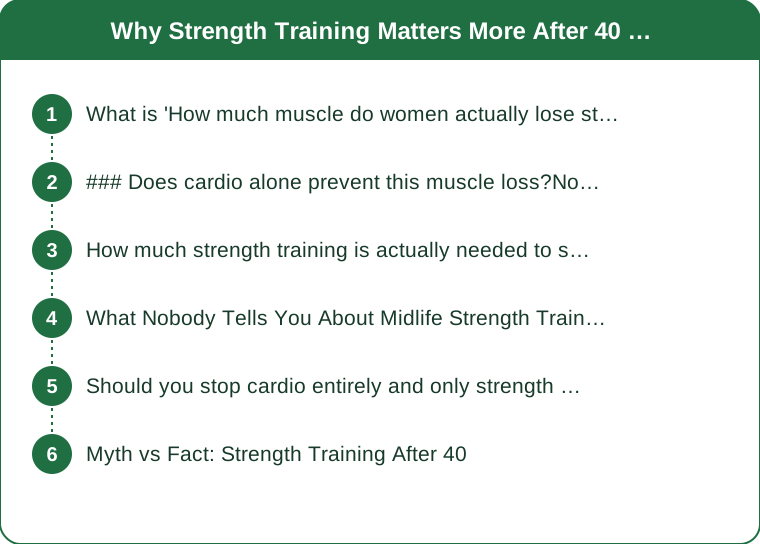
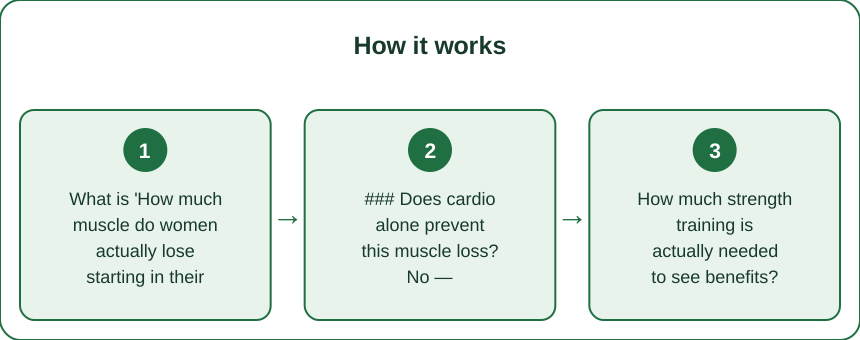
What is ‘How much muscle do women actually lose starting in their 40s?’
Women typically lose about 1% of muscle mass per year starting in their 30s, with that rate accelerating through the menopause transition due to declining estrogen, which plays a direct role in muscle protein synthesis. Left unaddressed, this can add up to a meaningful percentage of total muscle mass lost by the end of the 40s and into the 50s.
This muscle loss (sarcopenia) isn’t just a strength or aesthetic issue — it directly affects metabolism, balance, and long-term functional independence.
### Does cardio alone prevent this muscle loss?
No — cardiovascular exercise is excellent for heart health and endurance, but it doesn’t provide the mechanical tension needed to build or preserve muscle mass the way resistance training does. Someone who runs regularly but never lifts weights can still experience significant sarcopenia through their 40s and 50s.
What happens to bone density during this same period?
Estrogen decline during perimenopause and menopause accelerates bone density loss, and weight-bearing resistance exercise is one of the most effective non-medical interventions for slowing this process, since bones respond to mechanical loading by maintaining or building density.
How does strength training affect metabolism specifically in this age range?
Muscle tissue burns more calories at rest than fat tissue, so preserving muscle mass through strength training helps offset the natural metabolic slowdown that occurs with both aging and the hormonal shifts of menopause. See the H3 answers directly above — this section intentionally distributes FAQ-style answers throughout the body rather than only at the end.
How much strength training is actually needed to see benefits?
Research generally supports 2-3 sessions per week of full-body resistance training, hitting major muscle groups with enough intensity to feel genuinely challenging by the last few reps of a set. This doesn’t require hours in a gym — 30-45 minutes per session, focused on compound movements like squats, rows, and presses, covers most of the benefit.
Consistency over years matters more than intensity in any single session — this is a long-term maintenance strategy, not a short-term fix.

What Nobody Tells You About Midlife Strength Training
Most midlife fitness messaging still centers on cardio and calorie burn, but the research on bone density, muscle preservation, and metabolic health increasingly points to resistance training as the higher-leverage intervention for women navigating perimenopause and menopause specifically. Cardio remains valuable for heart health, but it isn’t a substitute for the muscle- and bone-protective effects that lifting weights provides.
Many women also report that strength training improves how they feel day-to-day — carrying groceries, climbing stairs, playing with grandchildren — in ways that cardio-only routines don’t deliver as directly.
Should you stop cardio entirely and only strength train?
No — both matter, and cardiovascular exercise remains important for heart health, which becomes a bigger risk factor after menopause as estrogen’s protective cardiovascular effects decline. The point isn’t to abandon cardio, but to make sure strength training gets equal or greater priority, rather than being treated as optional or secondary.
Myth vs Fact: Strength Training After 40
Myth: lifting weights will make women ‘bulky.’ Fact: without significantly elevated testosterone, most women build lean, functional muscle through strength training rather than significant bulk, and the muscle gained directly supports bone and metabolic health.
Myth: it’s too late to start strength training in your 40s or 50s if you never have before. Fact: research consistently shows meaningful strength and bone density improvements in women who start resistance training for the first time in midlife or later.
TL;DR:
- Muscle loss and bone density decline both accelerate through the menopause transition
- Cardio doesn’t address either of these the way resistance training directly does
- 2-3 full-body strength sessions per week covers most of the research-backed benefit
- Keep cardio for heart health, but give strength training equal or greater priority
This is general fitness information, not medical advice — check with your doctor before starting a new exercise program, especially if you have existing joint or bone health concerns.
Cardio isn’t wrong for your 40s and beyond — it’s just not enough on its own, and the barbell is doing work nothing else on your routine can replace.
Keep Reading
This article is for general informational and styling purposes only. Fit, sizing, and product availability may vary.